Follow us

A 13-Year-Old Saved The Beatles’ BBC Recordings
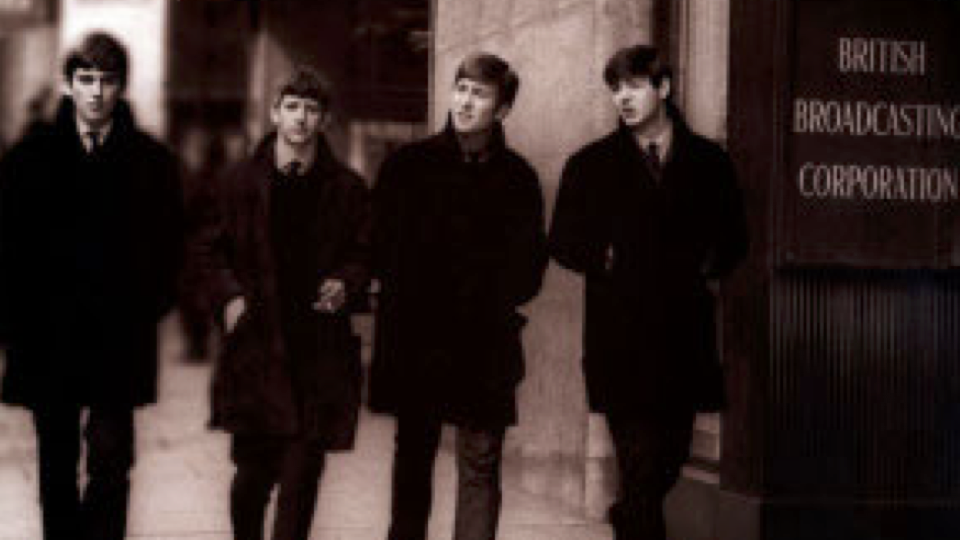
In 1963, Margaret was 13 years old. And she was breaking the law.
Thank goodness she didn’t know it.
When The Beatles released Live at the BBC in 1994, a cryptic credit for “Margaret Ashworth” left enthusiasts worldwide puzzled.
That name belonged to a 13-year-old fan whose amateur bedroom recordings saved a massive, vital portion of the band’s lost radio history.
Using her father’s modified VHF radio, she captured crystal-clear performances from the BBC in 1963.
Fortunately, she recorded them, so the world could hear them.
BBC Radio: The Beatles’ Massive Gap
In 1963, the BBC failed to preserve its Pop Go The Beatles sessions, leaving a massive gap in the band’s archive.
The BBC had no official archiving policy and relied on bulk-erasure units to purge and reuse the tapes once a broadcast had aired.
Margaret’s high-quality, reel-to-reel tapes became the backbone of a global hit album, rescuing dozens of rare rock ’n’ roll covers from permanent silence.
If Margaret Ashworth had strictly followed copyright norms in 1963, these historic recordings would have been lost forever.
In 1963, recording BBC broadcasts for personal use was technically illegal under the Copyright Act 1956, which offered no “fair dealing” exception for private home-taping.
Although every reel Margaret Ashworth captured in her bedroom was an infringement, her dedication preserved a “time capsule” that official institutions failed to keep.
Her story is a testament to the importance of amateur preservation.
Her legacy highlights a critical irony: the history we cherish today often survives only because a fan ignored the law.
The BBC threw history away.
Margaret Ashworth caught it (even though she wasn’t supposed to).

Summer of 1963: A Superfan’s Bedroom Studio
Margaret and her friend Helen were huge Beatles fans. But these two 13-year-olds had a big Beatles problem. They wanted to replay The Beatles’ broadcasts of the early 1960s—but couldn’t.
Her father had a VHF radio modified with a direct socket to a reel-to-reel tape recorder, ensuring high-quality audio.
This setup beat placing a microphone by the speaker by a mile.
Instead of picking up ambient noise from the room, the direct line recording sounded like the broadcast itself.
Pop Go The Beatles premiered in England on June 4, 1963.
The special 15-episode BBC radio series ran weekly on the BBC Light Programme until September 1963, featuring live performances and covers of top rock ’n’ roll bands.
Starting on June 17, 1963, Margaret began recording the radio series Pop Go The Beatles directly from the radio, eventually capturing 11 of the 15 programs on two reels of tape.
The recordings featured rare performances, mostly rock ’n’ roll covers that The Beatles soon dropped from their repertoire as they focused on creating original hits.
Eventually, Margaret lost interest in The Beatles and left home.
Her parents stored her tapes in their loft for 29 years.
1992: The Tapes Resurface
In 1992, now a subeditor at the Daily Mail, Ashworth mentioned the tapes to a colleague who knew The Beatles’ historian, Mark Lewisohn.
Her colleague told Mark about Margaret’s tapes, leading to a call to Margaret from Lewisohn.
Mark explained to Margaret that EMI had been developing an album of Beatles performances at the BBC.
The problem? Many of the recordings were of such inferior quality that they couldn’t release the album yet.
Margaret wanted to share her recordings with EMI, but first had to find the tapes, which had spent 30 years buried in her parents’ loft.
Then one day she found them.
The Next Hurdle: Playing the Tapes
Now that Margaret had found the tapes, the next hurdle was discovering how they sounded.
She bought a reel-to-reel tape machine so she could play her tapes.
The tapes sounded as good as the day she recorded them!
Mark was thrilled at the news because EMI had been trying to compile a BBC album for a decade, but the BBC had not kept its original tapes.
Margaret told Mark Lewisohn the tapes sounded “fab.”
EMI wanted a letter from Mark documenting the discovery to float “up the chain of command.”
On December 9, 1992, Mark Lewisohn wrote to EMI:
“As a result of the publication of The Complete Beatles Chronicle, I have recently been contacted by one Margaret Ashworth, who, back in 1963/64, regularly made tape recordings of the Beatles’ appearances on BBC radio.
“Owing to my involvement in the BBC radio series The Beeb’s Lost Beatles Tapes, I would consider myself familiar with the BBC material currently at the disposal of Apple/EMI, some of it being of excellent quality, some not, so I am absolutely delighted to report that Margaret Ashworth’s tapes in many cases exceed the best copies presently available.
“All her recordings were made from a good-quality Philips reel-to-reel tape recorder directly connected by a lead to a VHF receiver with a fixed aerial. Hence, they are as broadcast – excellent mono.
“Furthermore, most of her recordings are exactly as broadcast – that is, each of her 11 editions of Pop Go The Beatles comprises the complete 29-minute show, with all announcements and the guest group intact as well as the Beatles’ own sections.
“It means, to quote just one quick example, that her tape of the Beatles performing “Ooh! My Soul” contains the full song, whereas the best quality recording available until now misses the opening few seconds.”
The Abbey Road Test: “Gentlemen, We Have Heard Enough”
Some months after the initial discovery, Margaret and her husband were invited to the legendary Abbey Road Studios to put her tapes to the ultimate test.
The engineers decided to use the Little Richard rocker “Ooh! My Soul” for the evaluation.
First, they played EMI’s best existing copy. It sounded thin and “tinny,” having been recorded via a microphone held up to a radio.
Then, they played Margaret’s recording. Her version was “crystal clear.”
Stunned, the executives fell into silence until one engineer finally declared, “Gentlemen, I think we have heard enough.”
Recognizing that Margaret’s time capsules provided the high-quality material they had spent a decade searching for, EMI purchased the tapes.
Her recordings became the backbone of the 1994 Live at the BBC album, a worldwide phenomenon that hit number one in the UK and sold more than five million copies within just six weeks.

Why It Took 30 Years to Release Live at the BBC
Because these specific performances were recorded in BBC studios for radio broadcast rather than in EMI’s Abbey Road studios, they fell into a legal gray area.
The BBC’s role: The BBC possessed the actual physical session tapes. However, because they did not have a commercial record contract with the band, they could not sell or distribute the audio commercially without permission.
EMI’s role: The Beatles were under an exclusive recording contract with EMI Records. This contract prevented The Beatles from officially releasing recorded music through anyone else, including the BBC.
The song publishing: For the tracks written by John Lennon and Paul McCartney, the publishing copyrights were owned by Northern Songs, a company formed in 1963 by publisher Dick James, Brian Epstein, and the two songwriters.
This complex ownership caused the deadlock, which is why the 1963 sessions were heavily bootlegged for decades.
It required decades of legal negotiation between the BBC, EMI, and the band’s company, Apple Corps, before they could finally co-release the official Live at the BBC album in 1994.
Margaret and other fans preserved key recordings, prompting EMI/Capitol Records to issue official releases. But we’ll save that article for another day.
-Thomas Clifford
Fair use image of Live at the BBC



Anytime I get the pleasure of reading any Beatles article from this very talented author, I feel like I went back in time and discovered new uncovered stories that are not only riveting, but informative, as well !!
Hi, Vinny.
Glad you enjoyed the article and were able to go “back in time”!