Follow us

When 3 Bands Found Themselves

In his magisterial biography of The Beatles, Can’t Buy Me Love, Jonathan Gould wrote how the grueling experience of playing the clubs in Hamburg became the “hero journey” for the young Liverpool band. The lads worked long hours, encountered strange individuals, and grew up quickly. They returned to Liverpool a changed band, having put in what Malcolm Gladwell calls the “ten thousand hours” to achieve mastery of something. As Gould states, “they went from teenage dilettantes to adult professionals.”

This journey is quite different from what happened to The Grateful Dead, Rush, and The Jam. Each band had a distinct rite of passage that defined them.
The Grateful Dead – Live/Dead
Three albums into their career, The Grateful Dead were at a crossroads. Warner Bros., their record label, was not thrilled with sales; the band wasn’t satisfied with how their records sounded. What happened next was less a “heroic quest” than a “Goldilocks” moment. Their first album was too fast and underproduced. Their second and third albums were too slow and overly produced. Live/Dead got the tempo of the songs right. More importantly, it was a live album that sold fairly well and was well received by critics; it became the template for the band’s long-lasting appeal.
From the beginning, The Grateful Dead focused on concert work. An evening with the band was not about radio hits or crowd favorites. It was an adventurous musical experience. They presented their newest stuff, mixed in old stuff, sprinkled in cover songs, did a jam or two, and then signed off with a snappy number. Every show was different and utilized the technology of the time.
Live/Dead captured this special live experience with sparkling workouts like “Dark Star” and “The Eleven.” Their idiosyncratic selves are seen fully emerging: a lead guitarist who played his guitar like an electric banjo. A rhythm guitarist who tried to keep up. A bassist who played unpredictable jazz-type leads. Finally, an organist and drummer who let the other three lead the way. It all came together on the album and proved that the whole was greater than its parts.
This record allowed the band a chance to present what they did best, which was to pool together a musical gestalt that took no prisoners and played by another set of rules.
Rush – 2112
Mercury Records offered Rush one last chance to produce a hit record. They urged the Canadian band to play short songs and follow the trends of the time. What did Neil Peart, Geddy Lee, and Alex Lifeson do? They followed their instincts and recorded what many consider their finest work: 2112.
A wonderful documentary, Rush: Beyond the Lighted Stage, examines this crucial time in the band’s career. They knew it was all or nothing, and the idea of compromise was never considered. Side One begins with a 20-minute and 34-second blistering song, “2112”, a seven-part science-fiction, futuristic metal-themed concept that never lets up.
Each member wailed away, fusing a powerful sound. Side Two filled out the album with astonishing individual tracks. This was a band firing on all cylinders, and both critics and the audience got it.
Mercury Records never interfered with their creative process again.

The Jam – All Mod Cons
All Mod Cons was the third album for The Jam. Their first two were moderate successes, but they were pigeonholed as a retro revival band.
Would there be another chapter for the British band? Leader Paul Weller knew their backs were against the wall. What saved them was his songwriting. Instead of previous workaday commentary like “Here Comes the Weekend” and “Standards,” Weller’s writing took a Dickensian approach. He presented protagonists, “Mr. Clean,” “Billy Hunt,” and “English Rose,” living in post-World War II England. Like Dickens, Weller made his characters sympathetic.
Weller’s poignant vignettes, filled with Britishisms, were about being lost “In The Crowd” and about lonely lives and sorrows as well as warmth and romantic longing.
Weller was singing about a subject he knew well: himself. He painted authentic pictures of “glazed dirty steps” and “beautiful moss and colorful flowers.” Climaxing with “Down in the Tube Station at Midnight”, Weller’s exploration of the glory and grime of contemporary England earned the band critical and commercial success. Weller and his bandmates always played tight, explosive music. Now, with Weller’s poetic lyrics, their music took flight.
-Vincent Maganzini
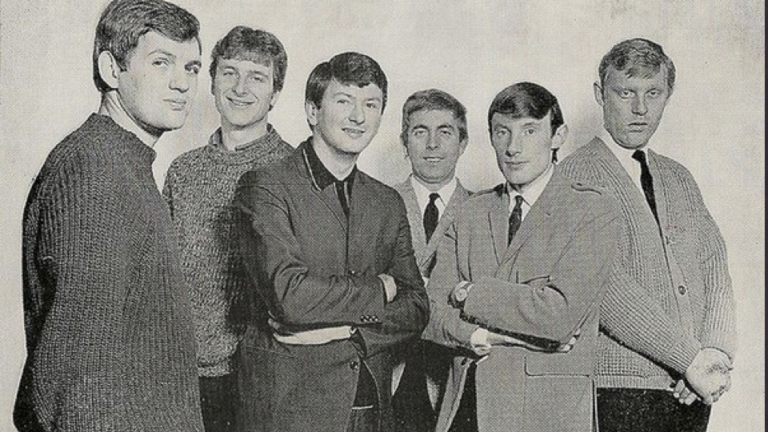
Photo: The Grateful Dead (public domain)