Follow us

John Lennon and “Tomorrow Never Knows”
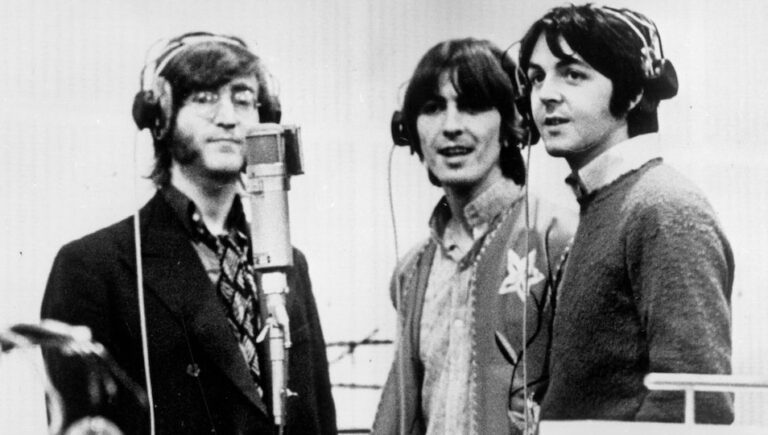
In the early months of 1966, The Beatles – having rejected the opportunity to make another film – basked in three glorious months “off.” Having worked unceasingly since 1962, they were elated to have some time to breathe, some time in their home studios to experiment with innovative sounds. For John Lennon, the break from “utility” gave him time to discover “wonder.” Always a voracious reader, he devoured one book after another…and with introspection, a keen intellect, and LSD visions, Lennon penned one of his most unearthly and esoteric songs, “Tomorrow Never Knows.” For decades, Lennon has been accused of “lifting the lyrics” for this powerhouse. But did he?
A persistent notion holds that John Lennon simply copied passages from The Tibetan Book of the Dead when writing “Tomorrow Never Knows.” The evidence does not support this. In fact, there is no indication that John ever read The Tibetan Book of the Dead.
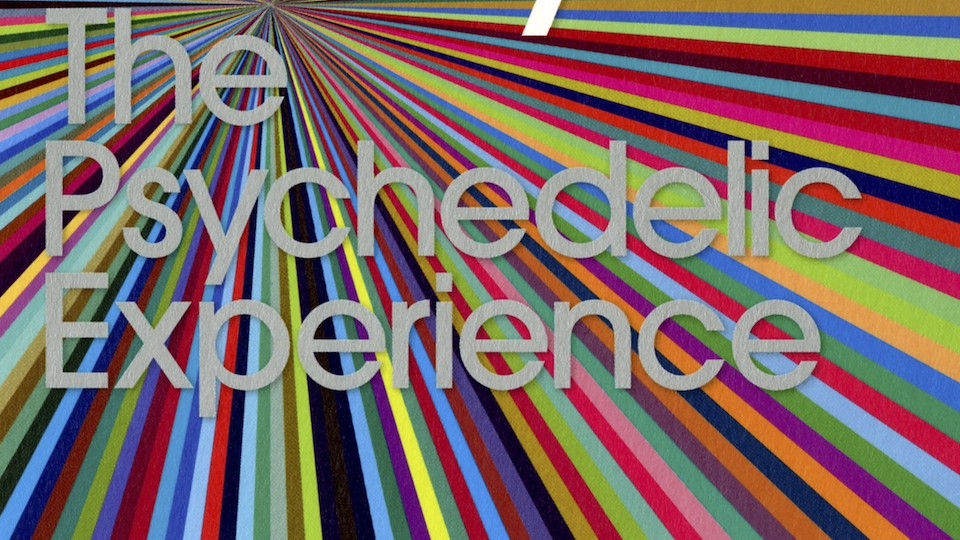
What he did read – intensely, repeatedly, and with growing fascination – was Timothy Leary, Ralph Metzner, and Richard Alpert’s 1964 manual The Psychedelic Experience. The book is not a translation of the ancient Tibetan text; it is Leary’s interpretation of the Evans-Wentz translation, filtered through his own psychedelic philosophy. Only the first third of the volume paraphrases the Tibetan material, and even that is a loose rendering. The remaining two-thirds are devoted to Leary, Metzner, and Alpert’s instructions for achieving “rebirth” through LSD.

To understand precisely what John encountered, I purchased a first-edition hardback – the same edition John held at Kenwood during the nights of 1-5 April 1966. I immersed myself in its dense, often abstract philosophical language. With John’s lyric drafts beside me, one truth became unmistakable: John absorbed the authors’ ideas deeply…but selectively. He did not adopt their doctrine wholesale. Instead, he filtered their teaching through his own emotional history, spiritual search, and artistic sensibility.
In Beatles ’66, Steve Turner agrees with this premise. He stresses (echoed by journalist Ray Connolly) that “…it is frequently assumed that John simply took a chunk of the Tibetan Book of the Dead and set it to music. This was not so.” He continues: “The Introduction [in The Psychedelic Experience], which sounds like the writing of media-savvy Leary, provided the first line of the song. This gave John his starting point.” But even that one inspiring line from the Introduction – “Whenever in doubt, turn off your mind, relax, float downstream” – was slightly altered by John Lennon.
Musicologist Wilfred Mellers in Twilight of the Gods, likewise notes that “Tomorrow Never Knows” contains “sundry references to The Tibetan Book of the Dead, culled from Leary.” But these are reference only – nothing approaching transcription.
Jerry Hammack, in The Beatles Recording Reference Manual, is equally precise. He states, “The song’s lyrics are Lennon’s take on Harvard professor Timothy Leary’s interpretation of the ancient Tibetan Book of the Dead…” John read and absorbed Leary’s work. Then, he culled and created his own philosophy.
Indeed, Ray Connolly in Being John Lennon, summarized the relationship succinctly: the lyrics were “suggested by the Leary interpretation.” A spur. A stimulus. Not a template.
Across five days – from 1 April to 6 April 1966 – John read and reread The Psychedelic Experience. But he did so as a young man carrying profound grief: the deaths of his Uncle George, his mother Julia, and his best friend Stuart Sutcliffe. He read as a harried Beatle overstretched by fame. He read amidst the unresolved wounds of his Liverpool childhood. He read amidst a growing disillusionment with life. Leary’s ideas did not land on a blank slate. They collided with the life John had lived. And in that collision, something new emerged.
Hunter Davies’s work The Beatles Lyrics preserves three early drafts of “Tomorrow Never Knows,” and they reveal John’s evolving attitude toward death and rebirth.
Version 1 – is bleak. All will join “the Void.” (In fact, an early working title for the song was “The Void.”)
Version 2 – begins to soften. “You may see the meaning…” There is some hope, even if it is conditional.
Version 3 – shifts dramatically. One can “play the game existence to the end…of the beginning, of the beginning.” Rebirth becomes possible.
Then, those who listen to “Tomorrow Never Knows” on Revolver will discover:
Version 4 – the final, familiar lyric. Here rises a crucial distinction: “Love is all, and love is everyone.” This core philosophy is not Leary. This is Lennon. And from that foundation, “All You Need Is Love” becomes the next logical step.
Steve Turner said it best: “John was profoundly moved by The Psychedelic Experience, and he wove elements of its philosophy into his own worldview. But the lyrics of ‘Tomorrow Never Knows’ are not a mere transcription. They are the creative result of transformation: John’s reshaping of the authors’ ideas into something unmistakably his and his alone.”

That is the heart of the matter. John Lennon did not copy The Tibetan Book of the Dead. He did not copy Leary. He read, absorbed, wrestled, and ultimately created – drawing from his own psychedelic experiences, his own personal trauma, and his own artistic instinct to produce one of the most innovative songs of the Twentieth Century – developing a new way of thinking that would guide John and Yoko’s peace platform throughout the coming decade.
-Jude Southerland Kessler
Fair use image