Follow us

Sneak of the Week: Chuck Jackson, “I Keep Forgettin'”
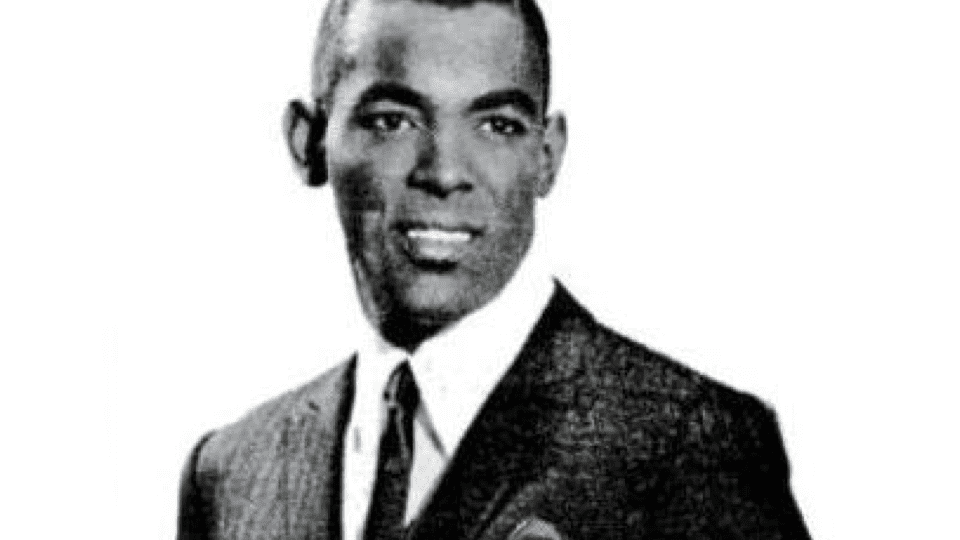
Did a ‘60s R&B hotshot inadvertently set the stage for Yacht Rock?
For such an ostensibly inoffensive figure, Michael McDonald can be a pretty polarizing character. As the patron saint of Yacht Rock, people have some strong opinions about him and the work he’s done as a frontman for The Doobie Brothers, a solo artist, and a guest vocalist with Kenny Loggins, Steely Dan, Christopher Cross, et al. In short, many either adore or despise the husky-voiced singer. So, wherever you fall on the Michael McDonald love/hate spectrum will likely influence your thoughts on his biggest solo hit, 1982’s “I Keep Forgettin’”—not about how good it is, but about whether he stole it from one of the most famous songwriting teams of 20th-century pop/rock.

Let’s take it back to 1962. Singer Chuck Jackson (not to be confused with the songwriter of the same name who penned hits for Natalie Cole and others) had been banging around for a few years, scoring a couple of big R&B (and minor pop) hits with “Any Day Now” and “I Don’t Want to Cry.” His huge voice had near-operatic capabilities, and it combined with his innate soulfulness to forge a signature style.
But nothing he had done before had set a precedent for a certain ‘62 Jackson single written by Jerry Lieber and Mike Stoller, the men behind “Hound Dog,” “Jailhouse Rock,” “Yakety Yak,” “Kansas City,” and loads more first-generation rock ‘n’ roll milestones. (Gilbert Garfield was credited as co-composer, but we’ll get to that momentarily).
The song itself was unique in the Lieber-Stoller catalogue at that time—melancholy and menace came together in its minor-key moodiness, and its intensity bordered on a scary sort of obsessiveness.
The arrangement, by Teacho Wiltshire, was equally innovative. Wiltshire would provide arrangements for ‘60s pop/R&B hits like The Drifters’ “Saturday Night at the Movies” and The Exciters’ “Tell Him,” but you’d be hard-pressed to find anything in his CV that’s even remotely similar to what he cooks up for this cut.
Between the dramatic orchestral percussion, sneaky swells of strings and backing vocals so deftly applied they could almost be samples if it weren’t 1962, and slinky, out-of-nowhere xylophone punctuation, the sonic setting comes off like a cross between ‘50s exotica, ‘40s cartoon music, and ‘70s Frank Zappa, all in the context of a theoretically commercial pop tune. Lieber and Stoller were producers on the track as well, and it’s possible that they egged Wiltshire on to really go to town with this one.
Then there’s the singing. Jackson’s commanding delivery maximizes both the drama that’s written into the song and the intensity added by Wiltshire’s wacked-out arrangement. He comes careening into the tune with as much emotional firepower as any R&B singer of the era, but he channels it all through the carefully controlled chops of a masterful pop vocalist on the order of Roy Orbison or Gene Pitney.
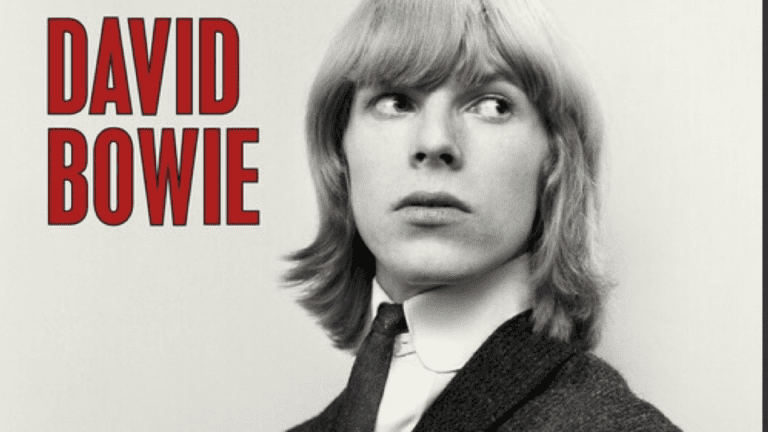
The title of this unorthodox little masterpiece is, of course, “I Keep Forgettin’.” Its unconventionality may have been too much for mainstream radio at the time—it peaked at #55 on the pop charts and didn’t hit the R&B charts at all. But its artistic merit was undeniable, as evidenced by the many covers that appeared over the years. Throughout the decades, the tune would be recorded by Ringo Starr, Procol Harum, David Bowie, Joe Cocker, and others. However, the 1982 single of the same name (not counting the parenthetical subtitle “Every Time You’re Near”) that became a smash for McDonald was not a cover of Jackson’s recording. It was an obvious and direct plagiarism of the 1962 composition.
All anyone ever needs to hear is the first 10 seconds or so of each song’s opening verse to make it clear beyond any reasonable doubt that the later song, credited to McDonald and Ed Sanford of the Sanford-Townshend Band, lifts its hook from the earlier song both musically and lyrically. The appropriation was so undeniable that Lieber and Stoller’s names were duly added to the McDonald tune’s composer credits. Curiously, Gilbert Garfield’s was not, possibly due to some previous deal struck by Lieber and Stoller over their copyrights. It’s impossible to know for sure.
The question remains: Was it intentional? Here’s where your preexisting opinions about McDonald might come into play. Was he the sort who would unabashedly steal part of somebody else’s song with no concern for the consequences, a la Led Zeppelin’s many well-known offenses in that area? Or was it simply an unconscious lift from a tune buried somewhere in his subconscious that he’d long ago forgotten?

Considering the sheer blatancy of it all, to the extent of even giving the song the same title, it would seem too obvious to have been pre-planned. If McDonald were to plagiarize something, he would surely have made some attempt at covering his tracks. So, from the objective POV, it seems like an honest, accidental recreation of a song occupying the shadowy recesses of his memory. Of course, if you’re a Doobies hater or you align yourself with the not-yacht crowd, your view may vary accordingly.
-Jim Allen
Photo: public domain