Follow us

Travis Wammack: Original Guitar Hero
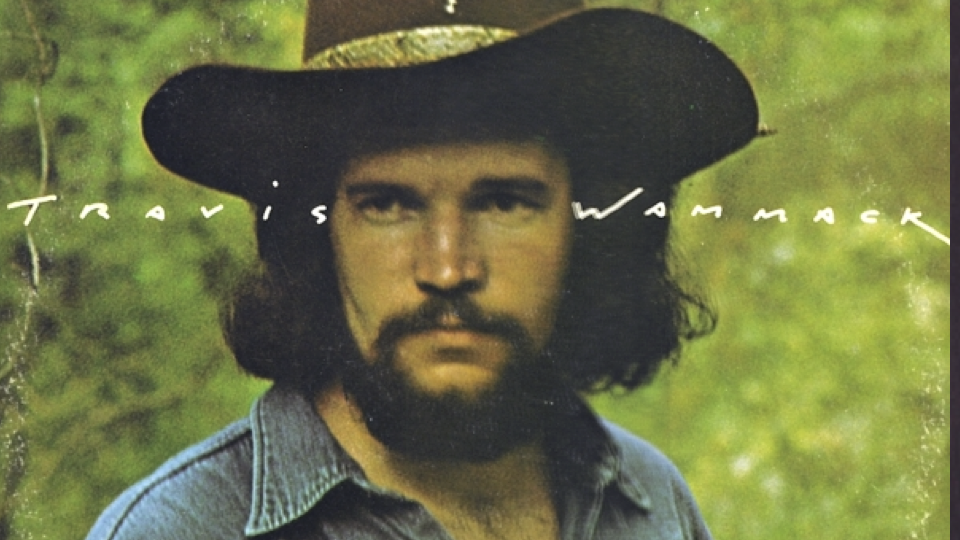
Perhaps some rock stars who left this mortal coil far too early would’ve lived a longer life if they’d put down the bottle and/or spoon and gone snake hunting with ace guitarist Travis Wammack.
Travis, who was Little Richard’s bandleader for twelve years (1984-1996), recalled, “Everybody else was doing drugs and drinking, and I’m chasing rattlesnakes and women.” While his bandmates were searching for where to get high, Travis, who died at the age of 81 on February 27, was searching for rattlesnakes, Copperheads and water moccasins. Once he spotted his slithery prey, Travis would subdue them with a slingshot or a bow and arrow. Then he’d make headbands, guitar straps, and belts from their skins and chow down on fried rattlesnakes, which he noted, “Taste like chicken.”
“I guess it’s the Indian blood in me…I used to hunt a lot with my daddy.”

When he was five, his sharecropper father came home with a guitar and said to his six children, “Any of you kids want to learn how to play this thing?’” Travis took to the guitar like a water moccasin to water. At eleven, he was helping his family by playing for cash in the streets and bars of Memphis. In a 2017 interview with Holger Peterson of CBC Radio, Travis recalled, “I was in a beer joint one day and I was standing by a jukebox and I knew just about every song and when people came up with a dime and were about to play the song, I’d say, ‘I could play that’ and they’d put their dime in my guitar and I’d do the song for them.”
One day, while walking home after busking, he was noticed by Eddie Bond, a DJ for KWAM. Eddie was also a promoter who booked “jamborees” where numerous musicians played on one bill. Once he heard Travis, Eddie asked if he’d like to open the shows.
After securing his parents’ permission, “Little Travis” warmed up the crowds for Carl Perkins and Johnny Cash. At one concert, Perkins lent Travis his Harmony Silvertone only to realize that the boy was so small that the guitar touched his toes. Carl whipped out his pocket knife and gouged a hole in his expensive, specially-made Silvertone strap so Travis’ fingers could comfortably strum the strings.
Maybe Carl’s ingenious gesture inspired Wammack to apply the same DIY inventiveness to his own music. He remembered, “I was at a drive-in one night with my girlfriend, and I got to looking at the drive-in speaker. I thought, ‘I wonder what that thing would sound like with a guitar coming through it?’ So when we left the drive-in that night, I ‘accidentally’ left that thing hanging on my window. I fixed it up, and I run my Super Reverb (guitar amplifier) into it, and you talk about a sound. You can hear it on my two Atlantic records, ‘Stay’ and ‘Louie Louie.’ I’m playing through one of them old gray drive-in speakers.”
Travis continued searching for his new sound. He found it after he ran a lamp cord out of his amp’s external speaker jack and into a tape recorder. The distorted “fuzzy tone” was heard on his signature hit, “Scratchy,” which he recorded at sixteen. A Tom Petty favorite, the 1964 instrumental featured a short spoken word part played backwards, which beat the Beatles’ reverse recording sections on “Rain,” “Tomorrow Never Knows” and “I’m Only Sleeping” by two years.
Travis said of his sound, “I had been credited with the first fuzz-tone. About a month later, a representative from Gibson Guitars came to Memphis and Melody Music, the music store where I bought all my equipment. Melody’s owner called, and he said, ‘There’s a representative from Gibson, and they want to talk to you about you endorsing a new fuzz-tone they’ve come up with.’ I remember it was a little old orange box. And it said Maestro Fuzz on it. So I plugged it up, and it was terrible. I said, ‘Nah, that’s not my sound,’ like a dummy. Had I endorsed it, I could’ve had Gibsons hanging on my wall everywhere. About a month later, I’m listening to the radio, and I hear this record, and I go, ‘God, that’s that darn fuzz-tone.’ You know what it was? ‘Satisfaction’ by the Stones.”

Years later, after playing a Little Richard show, Travis met Zeppelin’s Robert Plant and Jimmy Page. He stated, “Richard introduced me as his band leader. Robert Plant told me that him and Jimmy, when Little Richard said that, they looked at each other and said, ‘’Scratchy!’ … Jimmy told me ‘Scratchy,’ ‘Firefly,’ those are the ones that really inspired him to bear down. I could play ‘Scratchy,’ but I never could play ‘Firefly.’ What a compliment.”
Before he became Richard’s bandleader, Travis was a session guitarist at Muscle Shoals’ FAME Studios. His guitar work could be heard on songs sung by Wilson Pickett (“Hey Joe”), Bobbie Gentry (“Fancy,” #31 hit in 1969), Liza Minnelli, Lou Rawls, Clarence Carter, the Osmonds, and Mac Davis.
Travis also tried his hand as a solo act. After the very minor success of his “Whatever Turns You On” (#95 on Billboard in 1972), he pitched a follow-up song written by his pal George Jackson to FAME’s owner, Rick Hall. George had left FAME for the rival Muscle Shoals Sound Studio in Sheffield, AL, and left Travis a cassette of his new song.
Travis stated, “I took it to Rick after he got back from lunch. And I’m sure, after George had left him, Rick probably had a bad taste in his mouth, but he listened to it and said, ‘Travis, we can write them all day like that.’ Bob Seger loved it.”
The dismissed song was Seger’s “Old Time Rock ‘n’ Roll.”
Peanuts also played a major role in one of Travis’ favorite anecdotes:
“We (Travis and session guitarist Junior Lowe) were in the studio eating peanuts when Rick and Wilson Pickett come in, and Rick introduced us. We went back there over by our amps, and I see Wilson looking over at us and saying something to Rick, and finally Rick come over to us and said, ‘Hey, guys. Need to get rid of the peanuts.’ I said, ‘Do what?’ And he said, ‘Wilson said it was bad luck to eat peanuts on a session.’ I thought he was kidding. But we got rid of the peanuts.”
-Mark Daponte
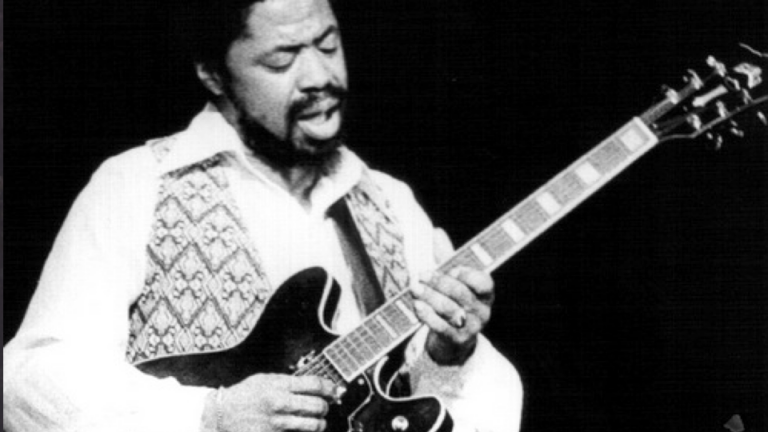
Fair use image of Travis Wammack