Follow us

“Trixie’s”: Squeeze Looks Back
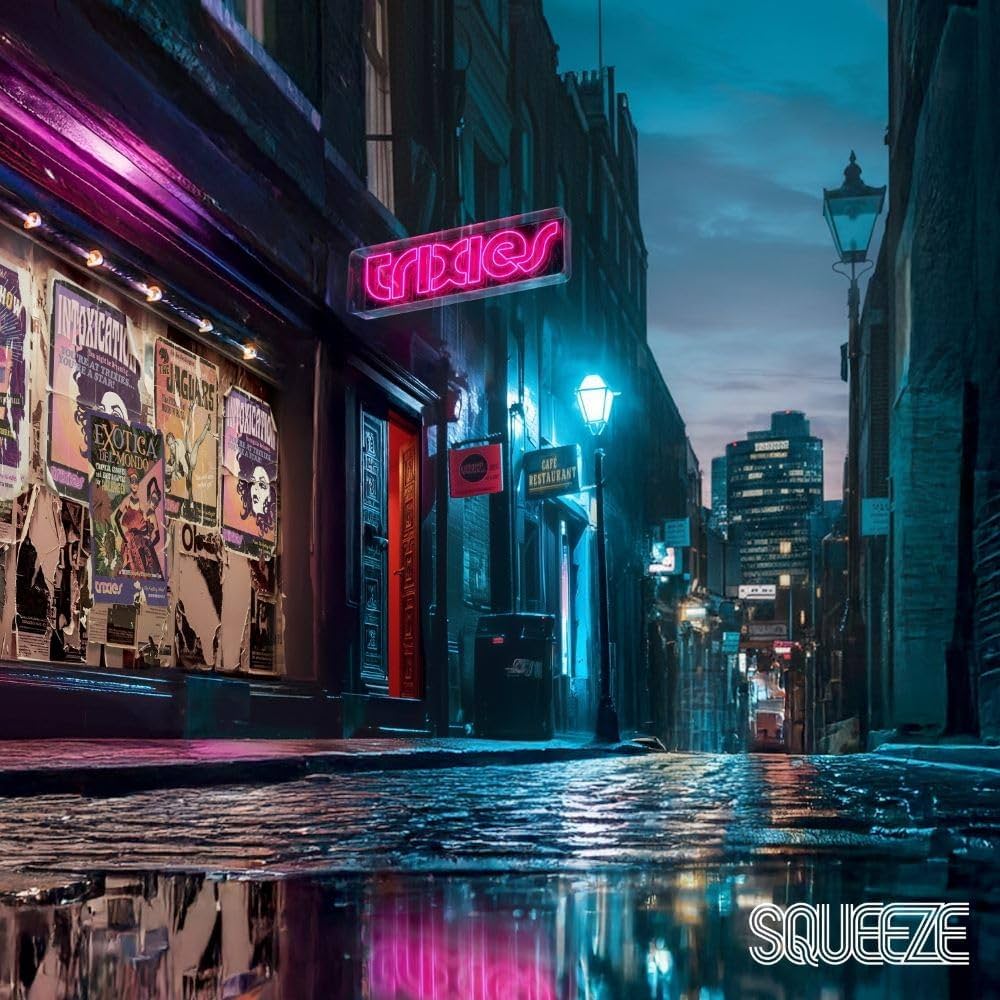
There are not many bands that can count on a healthy enough fan base to support 50 years of music. There are even fewer bands that can take 50-year-old material and successfully deliver it for today’s ears—but that is exactly what the members of Squeeze have done with their new album Trixie’s.
As upstart teenagers, the budding songwriters Glenn Tilbrook and Chris Difford put together a demo recording to showcase their talents to would-be record companies. The year was 1974, and along with the other early Squeeze members at that time—Harry Kakoulli on bass, Paul Gunn on drums, and keyboard wizard Jools Holland—they scraped together enough money to enter a studio and record an album’s worth of songs.

In the era of imaginary concept albums (think The Rise and Fall of Ziggy Stardust and the Spiders from Mars), Trixie’s was Tilbrook and Difford’s attempt to craft a story complete with characters and rogues who frequented an imagined London nightclub. It was a bold and creative platform for two teenagers (ages 16 and 19, respectively) eager to become professional songwriters while trying to attract attention and make a living as a working band.
Tilbrook has said in recent media interviews that the original demo attracted little attention from record company executives, though it received enthusiastic feedback from friends and colleagues. Fast forward 50 years: after a much-admired and successful career, the original demo tapes were rediscovered in storage, along with Difford’s long-lost lyric notebook. Rather than simply revisiting their early work as a curiosity, the duo reunited with their current band lineup and re-recorded the album in full.
Listening to it now, one is struck by just how tuneful and insightful their music was from the very beginning. It’s nearly impossible to believe that two teenagers wrote and arranged such an eclectic body of work. All the familiar ingredients of what would become the “Squeeze sound” are already present.
Although the current band—now expanded to eight players, none of whom were part of the original lineup—performs flawlessly across the album’s 12 tracks (with production by Owen Biddle leaping from the speakers), it’s the emotional weight and depth of the songs that truly endure. I found myself listening on two levels at once: part of me enjoying the music as it unfolded, while another part traced its DNA back through the Squeeze catalog—resulting in a constant, knowing smile.

There are numerous moments where these teenage writers clearly reflect the influence of early-1970s music. “What Can I Say” channels the soulful flow of Stevie Wonder, reminiscent of his album Talking Book. “This Place Called Mars” draws inspiration from David Bowie’s glam era; while not directly echoing “Life on Mars?”, it features guitar work in the style of Mick Ronson.
Difford has recalled writing “The Dancer” with the aim of capturing “the suburban sexual content of nightclubs,” remembering his first visit to a strip club and the shock of seeing a performer undress while dancing to Gilbert O’Sullivan. Meanwhile, “Don’t Go Out in the Dark” feels like a youthful interpretation of “Let Me Roll It” by Paul McCartney. Tilbrook has noted that it’s the only track on the album where they retained the original vocal melody but replaced the chords.
For my money, “Why Don’t You” is the album’s clearest sign of what was to come. It captures the wit, looseness, and melodic charm that would define the classic Squeeze formula. This track easily stands alongside the band’s later work.
There’s a surprising level of sophistication in these arrangements—far beyond what one might expect from teenage writers. Tilbrook has previously noted that their debut EP, Packet of Three (released in 1977), was shaped to fit the emerging punk movement. As a result, their music at the time was somewhat simplified to meet the expectations of both the scene and record executives.
History, of course, shows that Tilbrook and Difford would go on to become one of rock’s premier songwriting partnerships. Listening to Trixie’s, it is clear that even as teenagers, they already sensed they had something special to offer the music world.
What an emotional journey this must have been for two musicians now in their 60s—to rediscover and reimagine the work of their younger selves.
-Steven Valvano
Fair use image










Nice work!
Great piece Steve. Keep up the great work!