Follow us

Are “Real Songs” Making a Comeback? Some Current Hits Still Follow the Old Rules
For years, the narrative has been that the traditional pop song — verse, chorus, bridge, under five minutes, written by a small handful of humans — was on life support. Streaming supposedly killed it. TikTok chopped it into confetti. The “song” became a vibe, a loop, a hook in search of a structure. And the writing rooms ballooned from two people with guitars to twelve people with laptops.
But here’s the twist: 2024–2026 has quietly delivered a wave of chart‑toppers that are, in fact, songs — the kind your inner Brill Building romantic would recognize. They have beginnings, middles, and ends. They have bridges that actually bridge. They’re under five minutes. And they’re written by two or three people, not a small village.
If you’ve been craving evidence that the craft isn’t dead, the current charts are surprisingly reassuring.

Why This Matters (And Why It’s Happening Now)
Before we dive into the songs themselves, it’s worth asking: why the sudden return to structure?
A few reasons:
- Streaming fatigue. After a decade of algorithm‑bait, listeners seem hungry for songs that resolve — not just loop.
- The TikTok paradox. Short‑form video made hooks king, but it also made people crave the emotional payoff that only a full song can deliver.
- Artist pushback. A growing number of musicians are openly rejecting the “15‑second chorus first” formula.
- Live performance. As touring becomes the economic engine of the industry, artists need songs that work onstage, not just in the For You Page scroll.
The result? A surprising number of current hits that would make a Tin Pan Alley ghost nod approvingly.
With that in mind, let’s have a look at a few relatively recent hits with a classic song structure.
“Stick Season” – Noah Kahan
Writers: Noah Kahan Length: 3:02 Structure: Verse → Pre‑Chorus → Chorus → Verse → Chorus → Bridge → Final Chorus
Noah Kahan’s breakout hit is practically a case study in the “song as emotional arc” tradition. It’s built on a classic folk‑pop chassis: a confessional verse, a soaring chorus, and a bridge that actually changes the temperature of the track.
The bridge — “I love Vermont, but it’s the season of the sticks…” — is the kind of moment that would’ve made early‑2000s singer‑songwriters jealous. It reframes the whole narrative, lifts the melody, and gives the final chorus a new emotional charge.
It’s also written by exactly one person. In 2026, that’s practically punk rock.
“Texas Hold ’Em” – Beyoncé
Writers: Beyoncé, Raphael Saadiq, Killah B Length: 3:53 Structure: Verse → Chorus → Verse → Chorus → Bridge → Final Chorus
Beyoncé’s country‑leaning hit is a reminder that she’s always been a traditionalist at heart. Beneath the banjo and bounce is a very classic pop structure — the kind that would’ve fit on a Shania Twain record or even a Dolly Parton single.
The bridge is especially notable: it’s short, sharp, and functional, the way bridges used to be before they became optional. And with only three writers, it’s one of the leanest Beyoncé credits in years.
“Beautiful Things” – Benson Boone
Writers: Benson Boone, Jack LaFrantz, Evan Blair Length: 3:00 Structure: Verse → Pre‑Chorus → Chorus → Verse → Pre‑Chorus → Chorus → Bridge → Final Chorus
This one is a sleeper example of the “traditional song” comeback. Boone’s hit is built on a slow‑burn verse that explodes into a cathartic chorus — a dynamic that’s been out of fashion in the “start with the hook” era.
The bridge is a genuine pivot point: a quieter, more vulnerable moment that sets up the final chorus with a sense of earned release. It’s the kind of structure that rewards patience, which is refreshing in a world where songs often feel like they’re sprinting to beat the skip button.
“Lose Control” – Teddy Swims
Writers: Teddy Swims, Julian Bunetta, Ammo Length: 3:30 Structure: Verse → Pre‑Chorus → Chorus → Verse → Pre‑Chorus → Chorus → Bridge → Final Chorus
Teddy Swims is a throwback in the best way — a big‑voiced soul singer who actually sings his songs. “Lose Control” is built like a classic R&B power ballad, complete with a bridge that modulates the emotional stakes.
The writing team is tiny by modern standards, and the arrangement is built around vocal performance rather than production tricks. It’s the kind of song that could’ve been a hit in 1994, 2004, or 2024.

“Feather” – Sabrina Carpenter
Writers: Sabrina Carpenter, Amy Allen, John Ryan Length: 3:06 Structure: Verse → Pre‑Chorus → Chorus → Verse → Pre‑Chorus → Chorus → Bridge → Final Chorus
Carpenter’s pop ascent has been fueled by a surprising commitment to structure. “Feather” is a masterclass in the modern “tight pop song”: every section is distinct, the chorus lands exactly where it should, and the bridge adds a wink of attitude before the final chorus.
It’s also refreshingly compact — no extended outros, no TikTok‑bait repetition. Just a clean, well‑built pop song.
“Greedy” – Tate McRae
Writers: Tate McRae, Ryan Tedder, Jasper Harris Length: 2:11 Structure: Verse → Pre‑Chorus → Chorus → Verse → Chorus → Bridge → Final Chorus
At just over two minutes, “Greedy” is proof that short doesn’t have to mean shapeless. McRae and Tedder pack a full pop structure into a tight runtime, complete with a bridge that shifts the groove and melody just enough to keep the song from feeling like a loop.
It’s a reminder that the “song” format can survive even in the era of micro‑attention spans — if the writing is sharp enough.
“Good Luck, Babe!” – Chappell Roan
Writers: Chappell Roan, Dan Nigro Length: 3:37 Structure: Verse → Pre‑Chorus → Chorus → Verse → Pre‑Chorus → Chorus → Bridge → Final Chorus
Roan’s breakout hit is a neon‑lit throwback to ’80s synth‑pop, but the structure is pure pop classicism. The bridge is a highlight — a dramatic, theatrical shift that sets up the final chorus with a sense of triumph.
It’s also written by just two people, which is increasingly rare for a song with this much production polish.
There’s a lot to like about all of these songs. They each have an emotional and music arc, with a setup and payoff. They’re concise without being shallow. They express real ideas in a tight format. They’re great live, and can engage an actual group of IRL humans. It also helps that these artists can really sing.
It’s tempting to call this a renaissance — a return to the craft‑first ethos of earlier eras. But it’s probably more accurate to say that the pendulum is swinging back toward balance.
For a decade, the industry chased the algorithm. Now, artists are reclaiming the song.
The best evidence? Many of these tracks weren’t designed to be “hits” in the traditional sense. They became hits because listeners connected with them — and because the structure gave them something to hold onto.
In other words: the song isn’t dead. It just took a sabbatical. Because as it turns out, even in the age of infinite scroll, people still want songs that go somewhere.
-Al Cattabiani
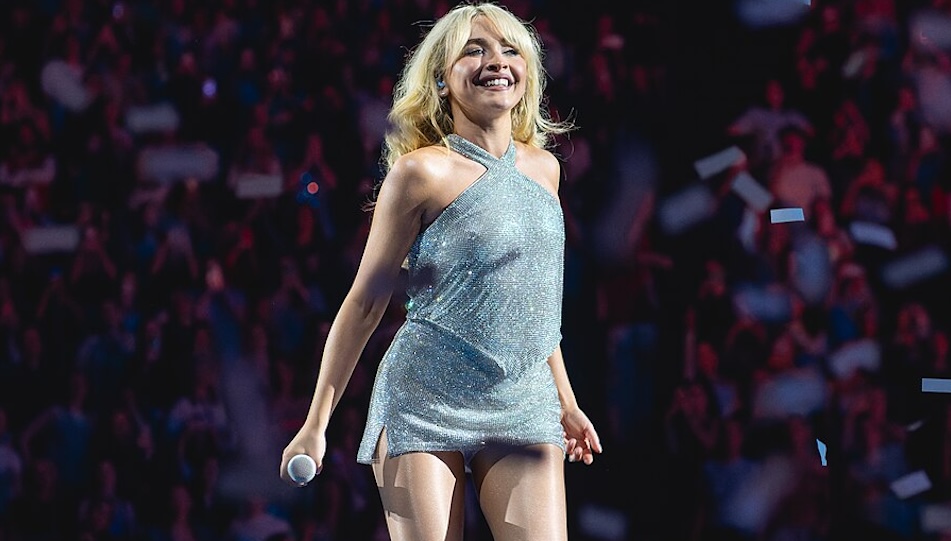
Photo: Sabrina Carpenter by Raph_PH, CC BY 2.0 <https://creativecommons.org/licenses/by/2.0>, via Wikimedia Commons