Follow us

Chip Monck: Voice of a Generation
Rap is one of the more unique music genres as some of its artists have named themselves after the tool of their profession: the microphone. A few of the more successful MC’s (a.k.a. “microphone controllers”) include MC Lyte, MC Hammer, and MC Ren of NWA. But in 1969, one emcee used his microphone to control an estimated rock concert crowd of 400,000 by informing them how the musicians were going to arrive to play: “So we’re flying everybody in! I almost made the worst pun in the world about high musicians, but we’ll skip that.”
It was emcee Chip Monck’s warning of a brand of bad acid at the first Woodstock concert that saved attendees from badly tripping: “The warning that I’ve received, you might take it with however many grains of salt you wish, that the brown acid that is circulating around is not specifically too good. It is suggested that you stay away from that. But it’s your own trip, be my guest.”

It wasn’t Chip’s job to man a microphone as he was hired by Woodstock promoter Michael Lang to be the lighting designer, co-production manager, and stage manager. Chip was enlisted to do quadruple duty after Lang realized he forgot to hire a master of ceremonies. There’s no record of how many concertgoers didn’t heed Chip’s warning and downed the brown. But Chip’s acid advice lives on as a go-to source for an easy gag. For example, in a 1999 Family Guy episode called “A Year of Birthdays,” an animated Robin Williams stated: “Don’t take the brown acid. It may turn you into a Martian!”
Chip’s experience in being the voice of reason may have been why he was later hired to be the lighting designer and stage manager at the Stones’ infamous Altamont concert. The Stones didn’t go onstage at their scheduled time because, reportedly, they were waiting for the sunlight to fade so both the stage and themselves would cinematically stand out in their Gimme Shelter documentary. Chip calmed the restless crowd by reading them Richard Bach’s Jonathan Livingston Seagull.
After Chip accused a member of the Hell’s Angels of stealing the purple stage rug, the irate Angel shattered four of Monck’s teeth with a pool cue.
Chip’s career didn’t end with his mouth leaking blood, but started because of a leak. The Wellesley, MA native was taught well by Greg Harney, a lighting director whom he met when Chip worked with a summer theater group that performed at Wellesley College. Chip took Greg’s vast knowledge and took it on the road with Harvard’s theater company. While the student artistes were in New York City in 1959, the 20-year-old Chip noticed something was askew at the Village Gate club: “I walked into the Gate and saw that it had a leak by the door. I told them I could fix the leak.” He parlayed that chore into a steady but low-paying job that paid him the vast sum of $16.83 a week but included all the entertainment he could see, like Sarah Vaughan, Bill Cosby, Thelonious Monk, Dizzy Gillespie, and Peter, Paul, and Mary.
Chip remembered that his co-worker later became someone to remember: “One of the busboys became my rigging assistant, and his name was Sam Shepard, who couldn’t tie a bow.” It was in New York that Chip began building his long lighting career as well as guitar speakers, which led to Bob Dylan’s manager, Albert Grossman, acquiring them for his client’s upcoming East Coast tour. Chip also helped the singer’s writing, noting: “We were having a drink at the Kettle of Fish [a West Village bar] and he said, ‘I understand you have a typewriter and I need it.’” Monck stated Dylan wrote “A Hard Rain’s Gonna Fall” on his IBM Selectric. After it was completed in Chip’s apartment, Monck recalled: “Dylan said, ‘You can read it over, but I don’t need a co-writer because I’m not paying.’”
Chip had a Zelig-like knack for appearing at seemingly every major cultural event with every major act, which included handling lighting when Dylan “went electric” at Newport in 1965. While Dylan impressed him, in 1966 Chip called one group, “The worst act I’ve ever seen. They have no discipline.”

Fortunately, the Rolling Stones improved, and in 1969, Chip was their tour and staging manager. He kept that gig for five years, despite finding two of the members slightly standoffish. In a 2014 interview with the Sydney Morning Herald, Chip stated: “I had two words with Keith in five years and maybe fifteen minutes with Mick while Charlie Watts and I and Bill Wyman rattled on and on and had a wonderful time.”
Chip derisively called Jagger “His Ladyship” and said in an interview with Tommy Canale in 2024, “If you make an appointment with Mr. Jagger, he’s someone who has stowed seven personalities or seven identities and it’s a good idea within the first thirty seconds to figure out to whom you are speaking. Otherwise, the meeting is of no use.”
After spending too many nights together with the Stones, Chip signed on to do the lighting for Zaire 74 Festival which featured BB King, the Pointer Sisters and James Brown. It was a 1974 concert held a month before Muhammed Ali-George Foreman’s “Rumble in the Jungle” in Zaire (now Congo).
But of the hundreds of Chip’s employers, his favorite was Bette Midler who hired him to be the lighting designer for her 1978 Divine Madness tour. He met and fell madly in love with an Australian named Camille while she was lounging by a hotel’s pool. The saucy Aussie turned down his offer to fetch her a Bloody Mary with a terse “F_ _ k off, mate.” Chip reminisced that when he saw “this brilliant piece of flesh lying on the pavement, a bell went off in my head” which turned into a marriage that lasted for 25 years.
Today, Chip lives in Melbourne, Australia, where the upfront 87-year-old is not afraid to dish on ex-employers, including Joni Mitchell (“a cold bitch”) and Paul Anka, who he accused of “not even polite or courteous in any fashion because it’s me, me, me.”
Edward Herbert Beresford Monck, who has been called the “Godfather of Rock and Roll Lighting,” was once called another nickname before he settled on Chip. In a 2019 interview with Event Elevator, Chip said, “Chip Monk has become a corporate name that was a defensive move. At the age of ten in prep school, the guys found out one of my names is Beresford. They changed that to ‘Breast Fed’, so I immediately had to become Chip Monk.”
-Mark Daponte
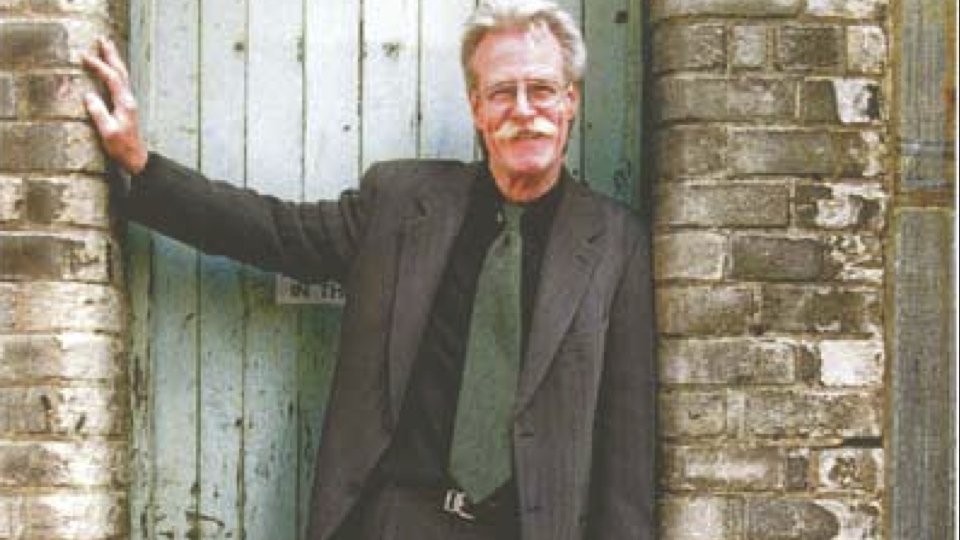
Photo from chipmonck.com