Follow us

“Graham Parker’s Howlin Wind”: A Review
The 1970s were a time of creative resurgence. On the one hand, you had Bruce Springsteen summoning emotion from the bottom of his gut, and on the other side, you had Elvis Costello, a man who transformed ditties into radio standards through arch wit and brusque humour.
In between these two giants stood Graham Parker and The Rumour, who delivered a sensational debut album in April 1976: Howlin’ Wind. The new book Graham Parker’s Howlin’ Wind finds the songwriter in a wistful mood, discussing his memories of that decade with author Jay Nachman.

Parker attributes his development to an upbringing: “To put it bluntly, I’m a victim of the class-education system. These things were formed years before. My parents had the same thing.”
The singer addressed his horrific memories in a tune that etched into the fragmented psyche. The entire debut was refreshingly honest: blinding hooks guided by heartfelt songs hung on internal truth. Belfast-born singer Van Morrison was a clear influence, especially Astral Weeks (“the most trippy record I ever heard”).
Producer Nick Lowe considered Parker to be an equal to Morrison, a bold claim, but Howlin’ Wind is a strong contender. Nachman isn’t afraid to ask tough questions, querying whether the album was timeless or simply a product of the era.
The standard of musicianship on Parker’s debut is top-notch. Guitarist Brinsley Schwarz had been around the block, having once opened for Paul McCartney and Wings. What differentiates Graham Parker’s Howlin’ Wind is that the interviews are so well articulated. Parker is particularly forthright, stating he never wished to be a James Taylor type, but craved the chance to front a rock band.
Bassist Andrew Bodnar disliked the moniker The Rumour, feeling it was too close in sound to “tumor,” but it won out. Parker, too, had misgivings, implying that The Rumour was as “soft” as his own name was. Steve Goulding was too preoccupied with his drums to care about a nom de plume, craving a “punchy and lifelike” ambience. Lowe saw his role as a form of “cheerleader,” carrying the tracks into the spotlight. Eloquently, Nachman writes that the record boasted a “thick, rough voice crawling out of a first-class rock & roll band.”
Graham Parker’s Howlin’ Wind stems from the writer’s place of love, offering a genuine affection for the record. That’s as much a strength as it is a criticism, but the work spins a compelling portrait of a time dictated by certain change. Soon after Parker’s debut, The Damned unleashed their equivalent Damned, Damned, Damned, a record that beat The Sex Pistols and The Clash to the punch. The record’s producer? Nick Lowe.

Just as Van Morrison fed into Graham Parker’s oeuvre, so did he work his way into the DNA of the next scene. Bob Dylan himself confessed to Parker that he loved “Don’t Ask Me Questions.”
Replete with reggae rhythms and bossa nova drums, the singer sounded confident on the searing tune. It could be his finest composition to date, a tune that’s as pertinent in 2025 as it was in the year it was written. The songwriter howled all over his first record and may well do the same again in the future on another record if so inclined. This book is a welcome look at an underrated album from an underrated artist.
-Eoghan Lyng
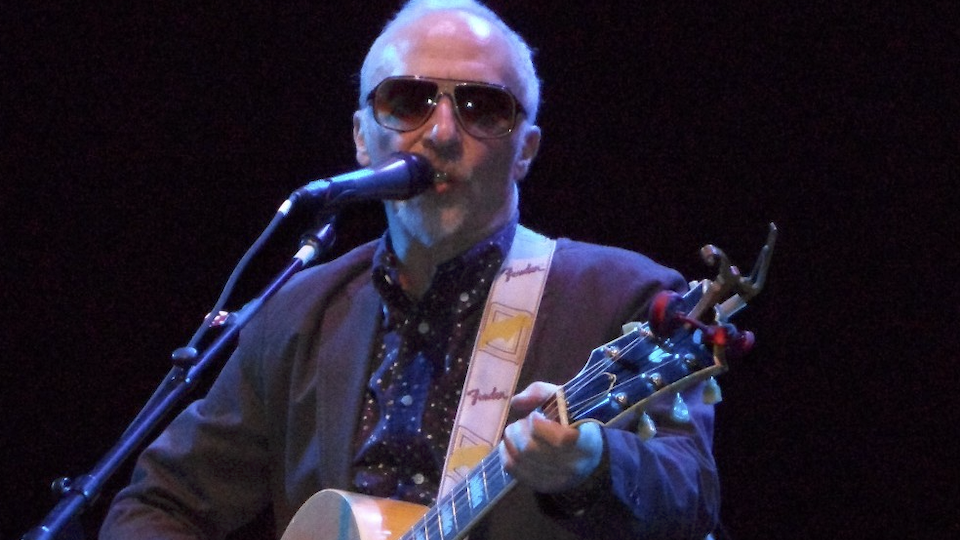
Photo: Graham Parker, 2012 (Robman94 via Wikimedia Commons)




Terrific review Eoghan! GP is also at his best with Heat Treatment.
Eoghan,
Once again, well done!
The album was just a glimps of the things to come. “Stick To Me” would blow them all away (along with “Sparks” of course) in a few more years. An underated and underplayed artist.
Thank you both!