Follow us

How Tex‑Mex Shaped the American Sound — And The Quiet Innovator Who Helped Make it Happen
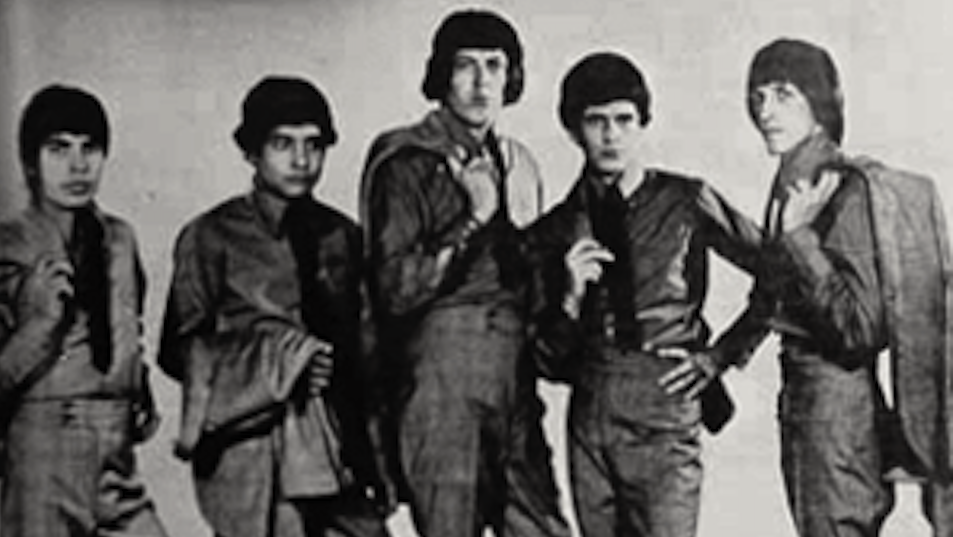
Tex‑Mex music has always lived in the in‑between spaces — the bars where English and Spanish trade verses, the dancehalls where polka steps meet border swagger, the radio stations where conjunto squeezebox riffs sit comfortably next to country weepers. It’s a sound built on cultural overlap, long before “fusion” became a marketing term.
And if you want to understand how that sound seeped into rock and roll and rewired country music, you eventually end up with a very short list of names, with Augie Meyers near the top.
Meyers — organist, songwriter, groove‑maker, and one‑half of the Sir Douglas Quintet’s secret sauce — recently passed away. And while he was never the loudest guy in the room, his Vox Continental organ quietly changed the shape of American music. His passing feels like losing one of the last true border shamans.
So here’s a tour through the sound he helped build — a sound that gave us the Texas Tornados, inspired The Mavericks, and left fingerprints all over rock and country, whether listeners realized it or not.

I. Before the Crossovers: When Tex‑Mex Was Just… Life
Tex‑Mex didn’t start as a genre. It started as geography.
South Texas in the early 20th century was a cultural mashup: German, Czech, and Polish immigrants brought accordions and polkas; Mexican and Tejano communities brought corridos, rancheras, and a rhythmic sensibility that didn’t care about borders. Conjunto was born not in a studio but in kitchens, weddings, and dusty dance floors.
By the ’30s and ’40s, players like Narciso Martínez and Santiago Almeida were defining the conjunto blueprint — bright accordion leads, bajo sexto strums, and a pulse that felt like a heartbeat with a little extra swagger. Tejano added horns and swing, proving early on that Tex‑Mex was never afraid of a little reinvention.
This was the soil. Rock and country were still decades away from realizing how much they’d borrow from it.
II. The Sir Douglas Quintet: Tex‑Mex Sneaks Into Rock and Roll
If Tex‑Mex had a breakout moment in rock, it was the Sir Douglas Quintet — a band that looked British (on purpose) but sounded like San Antonio on a Saturday night.
Doug Sahm was the charismatic frontman, but Augie Meyers was the band’s gravitational center. His Vox Continental organ didn’t just sit in the mix — it pushed the songs forward. Rhythmic. Percussive. Unmistakably rooted in conjunto’s accordion patterns. In other hands, the ultra-bright Vox might have sounded cheesy, but not here.
“She’s About a Mover” is the Rosetta Stone. That organ riff? Tex‑Mex wearing a mod haircut.
Meyers’ genius was subtle: he made the border sound feel inevitable inside a rock song. No gimmicks. No winks. Just groove.
And suddenly, rock musicians everywhere were absorbing a rhythmic language they didn’t even know had a name.
III. The Texas Tornados: When Tex‑Mex Became a Superpower
Fast‑forward to 1990. Tex‑Mex had influenced rock, country, and Americana for years, but it took the Texas Tornados to show the world what the fully realized version looked like.
This was a band that was the border: cosmic cowboy Doug Sahm, genre‑bender Freddy Fender, accordion royalty Flaco Jiménez, and Augie Meyers, the organ heartbeat.
Together, they made Tex‑Mex feel both timeless and brand‑new. Songs like “(Hey Baby) Que Paso” and “Who Were You Thinkin’ Of” weren’t crossover attempts — they were invitations to the party.
Meyers’ organ was the glue. Warm, pulsing, instantly recognizable. He played like someone who knew the border wasn’t a line — it was a state of mind.
The Tornados didn’t just win a Grammy. They made Tex‑Mex feel like essential American music.
IV. Country Music and Tex‑Mex: A Two‑Step With Shared DNA
Country and Tex‑Mex have always been cousins — sometimes distant, sometimes inseparable.
– The Rhythms The Texas two‑step owes as much to polka as it does to Nashville. That’s why a dancehall crowd can slide effortlessly from George Strait to Flaco Jiménez without missing a beat.
– The Stories Corridos and country ballads share a narrative soul: heartbreak, migration, pride, survival. Freddy Fender didn’t “cross over” — he just sang the same truths in two languages.
– The Mavericks: Modern Keepers of the Flame
If the Tornados were the elders, The Mavericks became the next great chapter.
Raul Malo’s voice alone could bridge continents, but the band’s sound — part rockabilly, part Cuban, part Tex‑Mex, part “whatever feels good” — made them natural heirs to the border tradition. Tracks like “All You Ever Do Is Bring Me Down” carry the unmistakable DNA of conjunto swagger and country storytelling.
They didn’t imitate Tex‑Mex. They absorbed it.
Related: 5 Reasons to Love Raul Malo
V. Tex‑Mex in Rock: The Influence You Hear Even When You Don’t Notice
Tex‑Mex didn’t just influence rock — it quietly rewired it.
– The Rhythmic Pulse That border polka beat sneaks into early rockabilly, roots rock, and even modern Americana.
– The Instruments The accordion went from “novelty” to “authenticity badge” thanks to Flaco Jiménez. And Augie’s organ became a template for roots‑rock keyboardists everywhere.
– The Attitude Tex‑Mex brought looseness, swagger, and a sense of place. It reminded rock musicians that regional identity wasn’t a limitation — it was a superpower.

VI. Augie Meyers: The Quiet Architect
Meyers’ passing hits hard because he was one of those musicians who made everything around him better without demanding the spotlight.
He was a bridge between cultures, genres, and generations. His organ lines were deceptively simple, but they carried the weight of a border’s worth of history.
He didn’t just play Tex‑Mex. He translated it.
And in doing so, he helped define what American music could be: hybrid, joyful, borderless, alive.
His sound lives on in every band that mixes cultures without apology. In every accordion‑driven rock track. In every country song with a little extra swing. In every Mavericks record that refuses to pick a lane.
Tex‑Mex is America at its best: messy, blended, rhythmic, and real.
And Augie? He’ll always be in the groove.
-Al Cattabiani
Photo: Sir Douglas Quintet (Mercury Records, Public domain, via Wikimedia Commons)