Follow us

“Finding Lucinda”: A New Doc Worth “Hearing”

Music runs on commitment, certainty and conviction. Without these things, a melody can never soar; a hook can never land. Guitarist ISMAY is well aware of this, given this (literal) journey to Lucinda Williams. ISMAY, a relatively youthful singer-songwriter, fronts the new documentary Finding Lucinda, discovering herself as she traces the footsteps her idol walked.
What’s clear from the start is how original Williams was in her preferred genre: country. “It’s like Lucinda has always been there,” a participant reveals, likening her to Willie Nelson: young or old, the vitality never wavered. As it happens, Williams only makes the briefest of appearances, but it’s charming to see her enjoying a letter her father wrote to the school. In his missive, he asked that Lucinda be excused from reading a “bad poem” because of the torrent of bad art that populated the world. Williams and ISMAY share a chuckle, keenly aware what it takes to create a worthwhile piece of writing.

Finding Lucinda incorporates archival footage; indeed, it opens with a rendition of “Greenville”, the younger Williams radiating under the spotlight. ISMAY watches this live performance with beaming eyes, before bravely singing “Am I Too Blue” for the camera. “I think it kind of shows what Lucinda can do,” ISMAY explains, and her version is quietly powerful to listen to.
Schematically, the film showcases the rustic environment; crowds of sheep pitter-patter around the red conclave. Clearly, this is a return to the American heartland, a terrain where acoustic instruments stand as literary devices for the commoner.

The questions ISMAY asks herself are some that the audiences convey silently to one another. Is it important to put so much on an icon? Can we find meaning in another person’s writings? What’s the importance of Country music? Charlie Sexton, Buddy Miller, and Mary Gauthier each give their two cents on the industry; Gauthier is the most eloquent and thoughtful. To her, it doesn’t matter if you’re a major success or an artist playing to a bar – the worries and anxieties never dissipate.
Throughout the feature, ISMAY covers a number of Williams’ ballads. “I Lost It” is the most impressive. It doesn’t hurt that Miller plays second guitar, accentuating her voice with precision and gentle strums. When she finally unveils a song for Williams, ISMAY is not only secure but fully prepared for the task.
Stylistically, Finding Lucinda bears a curious resemblance to Apocalypse Now – sure, there’s no napalm or war, but the idea that the protagonist sees themselves in the person they chase is pertinent in this documentary as it was in Francis Ford Coppola’s opus.
“People say it’s better not to know your hero too closely,” ISMAY confides to the camera. Singer-songwriters are, at the end of the day, human beings. She’s right to have her concerns, given Van Morrison’s fiery nature towards his fans. Luckily, the two of them hit it off, and suddenly the movie has found its purpose, theme and tempo. Williams is instantly likable, putting everyone’s worries to one side.
This is an intriguing angle to take for the rock documentary. Suddenly one person’s perspective on life and art is magnified by the inclusion of a second voice. Music needs conviction, but it also needs conversation, and Finding Lucinda is an integral part of the discussion.
-Eoghan Lyng
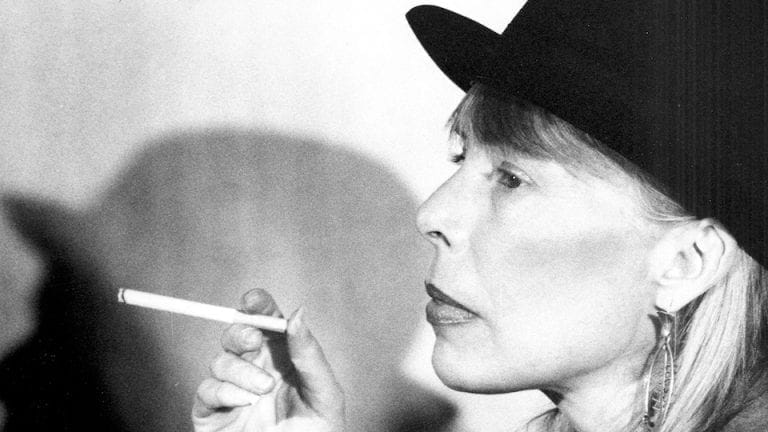
Photo: Lucinda Williams (Larry Miller via Wikimedia Commons)







Another song of hers: https://www.youtube.com/watch?si=87u8MUtBwB-hVaEW&v=OFmmX2YuO7s&feature=youtu.be