Follow us

Great 70s Instrumentals
Instrumental songs have been with us for a long time, having their roots in the classical music world. Although popular music would follow the path established by opera (bringing songs with vocals and story lines), pop would continue to dabble in the instrumental form from time to time. But there has been no equivalent presence like the 1970s bumper crop of pop music instrumentals.
With an array of styles, the 70’s instrumental single was the music business’s secret weapon, making a quick splash and a good amount of money too. The industry created an estimated $300M- $800M for the decade from instrumental singles ($2-$5 billon in today’s economics).
As the 70s were the heart of the classic rock and disco era, instrumentals were a quick step for many artists trying to crack the charts. The grand majority of artists behind these singles were quintessential one-hit wonders.

“Love’s Theme” – Love Unlimited Orchestra, 1973
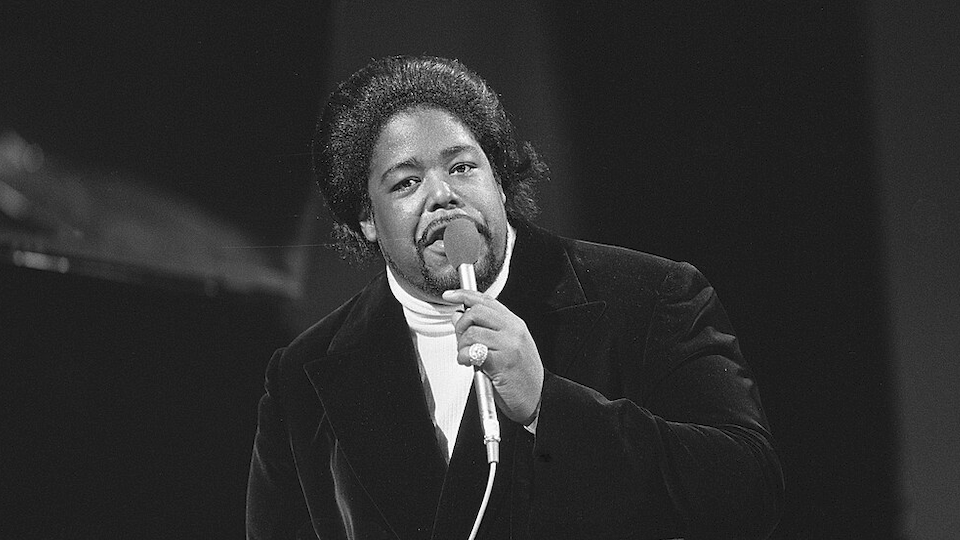
Written by then-insider/producer Barry White (who would go on to an iconic career as a sexy bass soul singer), and recorded with a full orchestra, the track is considered an early blueprint of successful disco dance music that would explode by the mid-70s. “Love’s Theme” would achieve #1 status on several US charts and Canada and hit its peak when ABC utilized the tune for its opening sequence for its golf PGA Tour broadcasts.
“Hocus Pocus” – Focus, 1971
Dutch rock band Focus put together a madman arrangement of power rock, whistles, yodels, drum solos, and wicked guitar licks that peaked in the Netherlands charts at #12. Two years later (1973), “Hocus Pocus 2” made it over to the USA in an edited version, reaching #9, and was memorialized as a humorous presentation of musical skill and production.
“Outa-Space” – Billy Preston, 1971
As his first single since leaving the Beatles’ collapsing Apple Records for A&M, Billy Preston had released this as the B-side to his intended single “I Wrote A Simple Song.” The world’s DJs found the instrumental more appealing, flipped the record, and began to support this “spacey” sounding track. This is achieved by Preston’s playing a Stevie Wonder-sounding clavinet through a wah wah pedal (Note- George Harrison plays dobro on this track). Preston’s funky mover reached #2 in the US charts, only being held off from #1 by Bill Withers’ “Lean On Me.”
“Pop Corn” – Hot Butter, 1972
The Moog Synthesizer was still in its infancy when German composer Gershon Kingsley released this track in 1969 for the Audio Fidelity label in Europe. The popcorn-sounding synthesizer theme caught the ear of Stan Free, a member of the American First Moog Quarter, who had already been releasing synth-oriented albums for several years. In 1972, Free released their version of “Pop Corn”, but changed the artist’s name to “Hot Butter” to fortify the kitsch-sounding song. The track became a surprise #1 hit in several Nordic countries (as well as France and Germany), while reaching #9 in the USA.
“Dueling Banjos” – Eric Weissberg & Steve Mandell, 1972
An original composition by Arthur “Guitar Boogie” Smith in 1954 (original title “Feudin Banjos”) first found its way to Americans’ ears through its airing on a 1963 TV episode of The Andy Griffith Show. Later, the tune was used in making the 1972 movie Deliverance, utilizing a rerecording by Weissberg and Madell (note, the recording is NOT two banjos dueling- it’s a banjo and a guitar). The track reached #1 for one week on both the Cashbox and Record World charts and, in 1974, won a Grammy for Best Country Instrumental Performance. A successful lawsuit by the composer was later rendered, as the tune was found to be used in the film without Arthur Smith’s permission.
“Frankenstein” – The Edgar Winter Group, 1973
The Edgar Winter Group had been jamming on the tune’s heavy rock theme for months when they decided to make the “monster-like lumbering beat of a song” (thus the name) a proper recording. The outcome of the sessions brought a 15-minute opus, whose many sections needed to be shortened and spliced together. The results are a breathtaking display of musical instrumental prowess, with whining guitars, pulsating synthesizers matched to sequence a drum solo, and memorable sax solos by leader Edgar Winter. A #1 in the US and Canada.
“Pick Up the Pieces” – Average White Band, 1974
Atlantic Records’ legendary record producer Arif Mardin was dead set against the Average White Band’s (ABS) release of “Pick Up the Pieces” as a single because, as he saw it, “The song was a funk instrumental played by Scotsmen with no lyrics other than a shout.” That may not have been seen as a great combination for potential chart performance, but the track did result in Gold status, peaking at #5 on the US charts.
“The Hustle” – Van McCoy, 1975
Just as the disco wave was cresting, music writer and producer Van McCoy was watching club patrons in a NYC club doing the latest dance craze known as “The Hustle.” Having successfully written for top acts like Gladys Knight, Aretha Franklin, and Lesley Gore, McCoy was in the perfect position to create a new song that would fit with the dance movements he was witnessing. Thus, born was the era’s quintessential disco song, all resting on his memorable stick-in-your-head melody played on a staccato piccolo flute. “The Hustle” would be the top-selling single in 1975 (5 weeks at #1).

“A Fifth of Beethoven”- Walter Murphy & Big Apple Band, 1976
“Theme from Star Wars”- John Williams & the London Symphony Orchestra, 1977
Proving that by the tail end of the 70s, almost any music could be put to a disco beat and become an instrumental hit. Adapting the first movement from Ludwig van Beethoven, Walter Murphy, an established Music Director for The Dick Cavett Show and The Tonight Show, created a demo tape of classical instrumentals with a heavy downbeat for dancing.
Once picked up by Private Stock Records (and later licensed to RSO Records for inclusion on the soundtrack to the Saturday Night Fever album), the song shot to #1 in 19 weeks, selling 2 million copies.
When the movie industry saw that this combination could sell records, film composer/conductor John Williams was commissioned to come up with a theme for the 1977 release of the original Star Wars movie. He was requested to create an “inspiring theme that people could dance to.” Achieving his task, the theme (that included a cameo appearance from R2D2) reached #10 on the Billboard charts.
“Feels So Good” – Check Mangione, 1978
The Chuck Mangione Quartet had already won their first Grammy Award in 1977 with their live recording of “Bellavia” in the Best Instrumental Composition category. Dedicated to playing jazz fusion music with various groups and venues since 1960, it would be his 1978 instrumental, “Feels So Good,” that put him on the international map. The song would reach number 4 on the Billboard Hot 100 chart in June of that year after spending a week atop the Billboard Easy Listening chart in May. The recording was also nominated for a Grammy Award for Record of the Year (losing to Billy Joel’s “Just the Way You Are”).
“Rise” – Herb Alpert, 1979
Written, in part, by Herb Albert’s nephew, Randy, “Rise” started as an up-tempo trumpet- oriented song but was eventually recorded at a slower tempo. The strategy’s change was to get away from “straight disco,” as the backlash to the genre had already begun. Albert’s wish was to make “Rise” “disco-adjacent.” It worked, as “Rise” reached number one on the U.S. Billboard Hot 100 for two weeks in October of that year. Alpert thus became the first artist to reach the top of the Hot 100 with a vocal performance (“This Guy’s in Love with You”, 1968) as well as an instrumental performance.
As this piece focuses on the legacy of instrumental singles, it should be noted that established 60s rock artist Jeff Beck would successfully go against the 70s singles grain and release several successful guitar-oriented instrumental albums, including 1975’s Blow By Blow and Wired (1976), earning high praise and Grammy Awards.
-Steven Valvano
Photo: Barry White (Fotograaf Onbekend / Anefo via Wikimedia Commons)