Follow us

Martin Scorsese’s Love Affair with Music
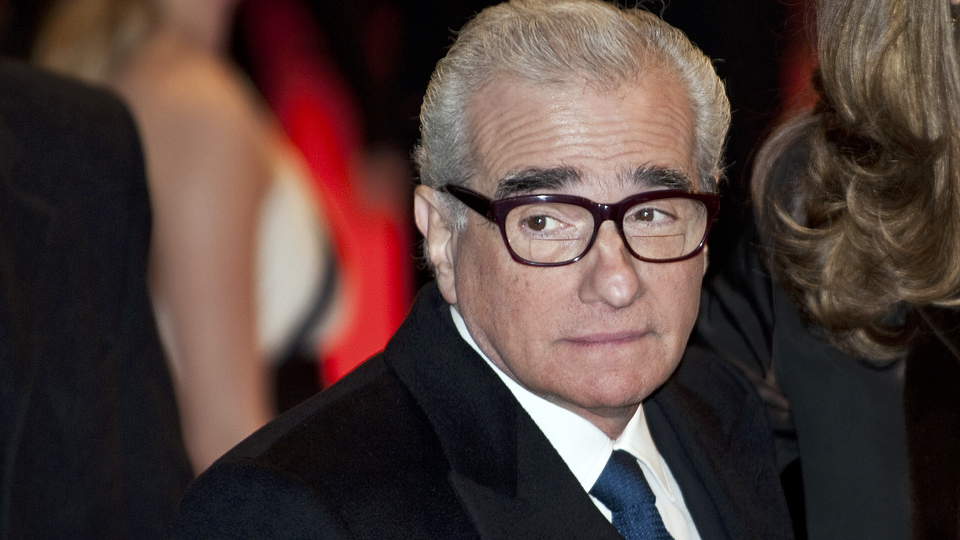
Crime and punishment. Love and hate. Humor and tragedy. Flesh and spirit. Life and death. These are the human condition issues that director Martin Scorsese has been tackling since the onset of his career.
Maestro filmmaker Martin Scorsese has been thrilling moviegoers and realigning our brain cells since 1967, beginning with Who’s That Knocking at My Door. Despite a few flops in an otherwise stunning output, Scorsese is considered one of the highest-level directors in film, practically rejiggering the cinematic form. He has stayed in our consciousness due to his creative blend of perfect evocation of time and place, a stellar ensemble cast, and his own ineffable genius.
There is one more item: his use of ambient music to heighten and strengthen the impact of his work. Scorsese is hardly the only director to embellish his movies with mood-altering music, but his choices are uniquely quirky, weaving a well-known rock tune over some action in a manner that changes not only the whole vibe of the scene but often the track itself. He frequently has a specific tune in mind for a scene, even before he shoots it.
There’s an abundance of these musical gems in his body of work, all worth seeking out. Here’s a starter list of some memorable examples.
The Rolling Stones’ “Gimme Shelter,” from The Departed (2006)
This is not a one-off. The Stones’ stunning opening track from their 1969 Let It Bleed album is a soulful rocker that bemoans the brutalities of war, rape, and murder. It seems a special favorite of Scorsese’s and was used to great effect in Goodfellas and Casino, underscoring the darkness of the criminal underworld. But we think it was best applied in the crime thriller The Departed. Jack Nicholson (as real-life gangster Frank Costello) struts through a vintage New York scene, menacing his “constituents” (and their still-innocent children) with a palpable chill, courtesy of Nicholson’s acting chops and the impeccable scoring.

Derek and the Dominos’ “Layla,” from Goodfellas (1990)
Here’s an ironic use of a love song played over a heist’s ugly aftermath. The piano portion of Eric Clapton’s classic “Layla” plays mournfully over scenes of carnage and retribution. Urban children come across a gaudy pink Cadillac and the overdressed, doomed corpses within it. The shock value is undeniable, but it’s transcended by the visceral ache we experience through the melancholy music. It’s hard to hear “Layla” in the same way again.
Kris Kristofferson’s “Pilgrim, Chapter 33,” from Taxi Driver (1976)
A subtle interweaving of this 1971 track finds its way into the gritty masterpiece Taxi Driver. Robert De Niro plays Travis Bickle, a wildly troubled vet who wears his detached bitterness like an impenetrable cloak. But while on a date with the lovely Betsy (Cybill Shepherd), she quotes the song’s lyrics, “partly truth and partly fiction – a walking contradiction,” in the context of Bickle.
Later, he sets out to purchase the album to give to her while the tune plays softly in the background. It shades his loneliness in a more sympathetic light and gives him a fleeting air of humanity and dignity.
Aretha Franklin’s “Do Right Woman, Do Right Man” from Cape Fear (1991)
Scorsese’s ability to take a beloved song and bend it to his will turns up again in the thriller Cape Fear. It’s not the best of his films. Still, De Niro’s portrait of a vengeful psychopath pursuing an innocent teenage girl and her family is petrifying.
Franklin’s sensual classic “Do Right Woman, Do Right Man” celebrates the love of two equally committed partners. De Niro’s character, Max Cady, plays it for the naive, receptive teen over the phone in the guise of being her acting coach, deeming himself the “Do Right Man” in an act of vile flirtation that brings him frighteningly closer to his evil goal.

The Crystals’ “Then He Kissed Me,” from Goodfellas (1990)
Who among us can forget one of the most impactful establishing scenes in cinema history? It’s that ribbon-smooth 3-minute tracking shot through the back door of the Copacabana, as gangster Henry Hill takes his girl Karen on their first date.
Ray Liotta and Lorraine Bracco conjure up all the excitement of fresh romance, sexual chemistry, and the lure of the (ultimately doomed) “good life” as they snake through the back of the club. The upbeat pop confection shifts the point of view of this testosterone-y environment to Karen, resplendent in her pretty dress and bright-eyed with excitement, keeping pace with her man as they make their way to a table that gets placed in front of them in a perfectly choreographed motion.
“Then He Kissed Me” is perfectly synchronized with their movements, lifting this scene to a level of mind-bending intensity. This iconic tracking shot is Martin Scorsese at his movie-making best.
-Ellen Fagan
Photo: Martin Scorsese, 2010 (Siebbi via Wikimedia Commons)