Follow us

We Need to Talk About Paul. And Mick. And Paul…
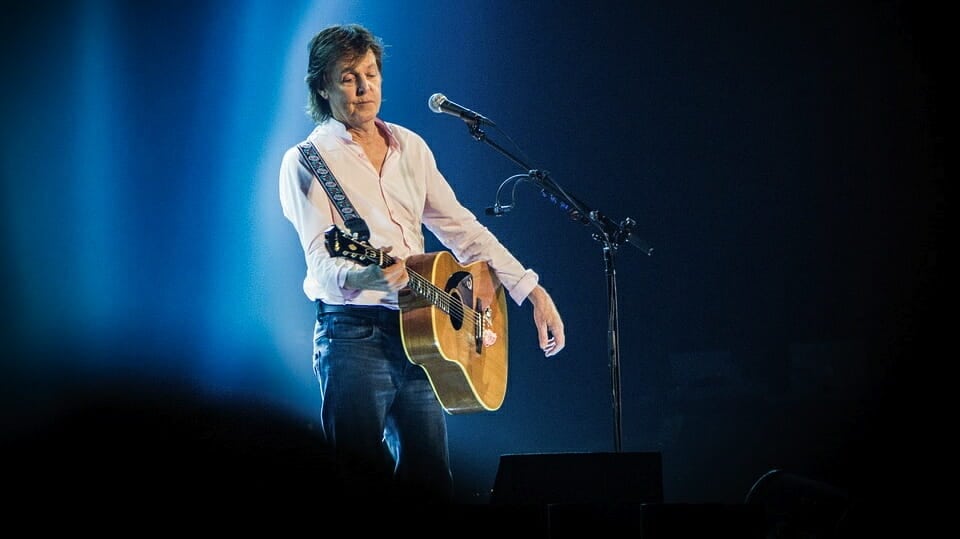
“I’d rather be dead than sing ‘Satisfaction’ when I’m 45.” – 31-year-old Mick Jagger, People magazine, 1975
“Will you still need me…when I’m 64.” – written by Paul McCartney, age 14-16
This is a meditation on music, Youth Culture, and age. I don’t know what the “right” answer is (so please don’t come for me), but the question has been out there for several years now.
In 2025, Paul McCartney appeared on the Saturday Night Live special celebrating 50 years of musical guests. It was obvious that, at 83, his voice was understandably but dramatically diminished. There was a lot of chatter about it afterwards.
He recently appeared on SNL again, and those same discussions came up. It seemed to boil down to two camps of thought:
1) It’s hard to listen to. He should stop.
2) He’s Paul f’g McCartney, and we’re lucky to still have him around.
There’s more.
- Paul Simon, 84, has been on tour, with hearing loss that makes it difficult for him to sing as he once did.
- Vince Neil of Mötley Crüe went viral when he could barely remember the lyrics to their hits, let alone perform them (he was rumored to need oxygen backstage).
- David Lee Roth cleverly worked out his sets so that his band or the audience sang most of each song, while he dropped in his own moments of “interpretation.”
- A friend saw Earth, Wind, and Fire and – with the absence of key members like founder Maurice White – noted that the show was simply not the same. Original members Verdine White and Phillip Bailey are 74 and 75, respectively.
- Madonna is only in her late 60s, but is still doing the edgy, in-your-face antics on social media (and don’t get me started on what she’s done to her face) to maintain some youthful relevance. As a fan, it’s hard to watch.
- Poor Frankie Valli is 94 years old and STILL has live shows planned (which seems like elder abuse). When he performed near me a few years ago, reviews noted that he was reduced to lip synching, while backup dancers 60 years younger gyrated frantically, trying to create energy around a man who was clearly just…tired.
All of these point to the question, “When should our heroes hang it up?”
The notion of when to walk away has always been a part of performing life; the timing is unique to each artist.

The Who has been doing “farewell tours” since the 80s. They swore that 2025 was the last one, but Roger Daltrey has already announced some solo gigs for this year.
Steve Perry of Journey still has the pipes; he’s just not interested in performing. Years ago, Grace Slick stepped away from shows, saying that playing rock past the age of 50 was ridiculous.
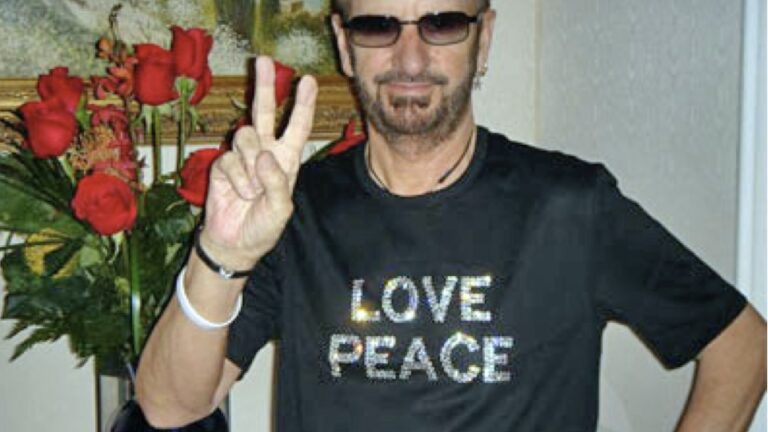
At nearly 86, Ringo is still out there, but the expectations of his abilities as a singer are not the same as those of his former bandmate, Paul. He still drums, leads his band, and charms the audience.
Bruce Springsteen is hale and hearty at 76 and is, well, Springsteen.
At 81, Rod Stewart’s familiar rasp still kinda works, even all these years later. But Axl Rose? Not so much, and with Guns N’ Roses gearing up for a summer tour, it could be…awkward.
For the Boomer generation, there’s an added degree of difficulty to this discussion; we grew up in a vibrant Youth Culture. Neil Young noted that fading away is the sadder option. Our heroes are meant to be preserved in amber. But Father Time doesn’t play like that, frequently marching over vocal and performing abilities that once left us joyous and screaming.
In 2016 and 2017, we were reminded of the painful reality of time, with its related age and illness, when we lost so many artists, starting with Bowie, running through Glenn Frey, Tom Petty, Prince, Gregg Allman, Walter Becker, and others. Our memories took one gut punch after another.
Idols may accomplish youthful immortality through tragic means, as was the case with Jimi Hendrix, Jim Morrison, John Lennon, Marc Bolan, Kurt Cobain. They literally lived fast, died young, and left a good-looking corpse – as well as leaving behind their music. Nothing really changes in our experience of them.
However, when they’re still with us and working into their later years, it becomes a harder thing to reckon with when, rightly or wrongly, they simply can’t pull off what their fans expect.
So, what’s the answer?
Robert Plant has retreated from his 70s rock god act, reinventing a few Zeppelin tunes with partners like Allison Krauss or his new band, Saving Grace. He skips the big arenas; the new interpretations of familiar songs make the most of where he’s at now vocally. It keeps them fresh and interesting, both for him as a performer and for the audience.
In March of this year, McCartney played two well-received, low-key dates at the small Fonda Theater in L.A. while promoting The Boys of Dungeon Lane (itself a look back at his youth). The intimate setting suited him and didn’t require the big theatrics that anyone in their 80s would have trouble pulling off.
Which brings me to the Stones.
Their new album, Foreign Tongues, is due in July. They’ve teased another tour for 2027.
For their last album, Hackney Diamonds, the video for the single “Angry” incorporated old footage of themselves alongside Hottie of the Moment, Sydney Sweeney. It was clever, and it worked.
However, on the first video for this new project, they’ve used AI once again to “de-age” themselves. Repeating the trick just seems desperate.
As musicians, they still have it; Mick is still a powerful frontman. But I wonder if scaling back their arena shows to smaller venues wouldn’t be more effective at this stage, and give them the chance to better highlight the blues songs they first loved?
Fan responsibility is part of this discussion. We’re not in the same shape as we were 25 or more years ago, either (I know I’m sure as hell not), so we should cut aging artists some slack. Still, seeing the touchstones of our youth struggle to meet past expectations is hard. No one wants Fat Elvis.
On the other hand, if the artists love performing and still feel they have something to give, who are we to stop them? They’ve earned it.
It boils down to the question: how can we enjoy beloved artists in their later years in a more realistic way? I suppose that both fans and performers alike need to radically adjust expectations. Does the artist choose smaller venues? Bring in support from additional musicians? McCartney, for example, has added a female backup singer to help with the high notes.

Do they leave out certain songs from the set if they can’t pull them off — even if they’re “expected” by fans? Do they create more low-fi arrangements that better suit their vocal abilities? Do they do as the Beatles did in ’66 and forego live shows altogether for the studio?
It’s a tricky, often delicate, question. Personally, I’m sad we even have to address it, but here we are. What are your thoughts? (And please, be cool).
-Cindy Grogan
Photo: Pixabay





I think as long as Paul McCartney can do it, he should do it.
In a world where it’s even harder to break through than ever and with a massive amount of new music being made, people really ought to try and move on, and start exploring more. .There are new heroes waiting to be found.
Very interesting take. It’s like every other job — at some point, you retire and the new crop of folks move up. Thanks for reading!