Follow us

“Introducing The Beatles”: A Perfectly Timed Gamble
It’s all Ed Sullivan’s fault
I’m blaming him for my Beatles record collection.
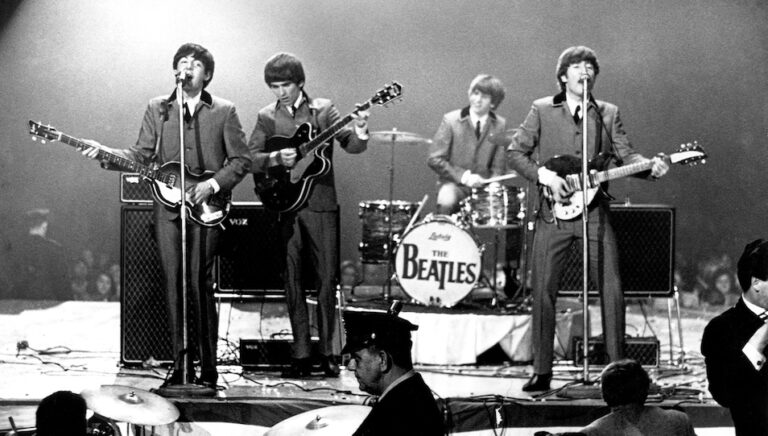
Because without that February 9, 1964 Sunday night curtain opening, do we even get The Beatles in America?
That event triggered a 62-year habit: hunting Beatles vinyl pressings.

A great pressing isn’t just “an album.”
It’s a timestamp.
It’s a record with a story.
The music is immortal, but the objects aren’t.
Here are five Beatles “grails” I collect (and why):
- The Savage Young Beatles
Some of the earliest Beatles recordings from Germany show up here. Finding a mint copy is nearly impossible.
- The “Lost Harrison” White Album (compressed mastering)
George Harrison reportedly hated the first 33 initial masterings and wanted them destroyed. Early copies are scarce and often show multiple label misprints.
- The C1-9 catalog (Capitol, 1988–1990)
The last dedicated run of U.S. configuration Beatles albums pressed from original analog master tapes by Capitol. Audiophiles chase these for their clarity.
- Capitol Record Club editions
Mail-order Record Club pressings are rare variations of the retail releases, with small differences that collectors obsess over.
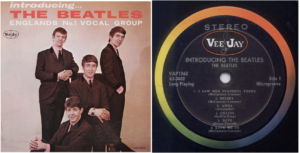
- Introducing the Beatles
What makes Introducing The Beatles such a compelling collectible is that it lives at the intersection of:
– timing
– legal tension
– distribution chaos
– financial downfall
It’s an album surrounded by questions with conflicting answers: who had the rights, who was allowed to sell what, what versions were rushed, what was altered, what got pulled, what slipped out anyway.
Capitol’s four “no’s” (and the scrappy label that beat them to The Beatles)
In 1963, Capitol Records did something that seems impossible in hindsight: they turned down the Beatles four times.
As the U.S. affiliate of EMI, Capitol had the right of first refusal. And they passed on the first four singles: “Love Me Do,” “Please Please Me,” “From Me to You,” and “She Loves You.”
The thinking was simple and very wrong: British rock wouldn’t sell in America.
That rejection created an opening for an underdog
In February 1963, Vee-Jay Records signed a licensing deal with EMI affiliate Transglobal.
It was a five-year arrangement that gave Transglobal the right of first refusal for Beatles records (and The Four Seasons). Transglobal shopped the rights around. Eventually, they offered them to Vee-Jay, a small independent label based in Chicago.
Here’s the twist: Vee-Jay primarily wanted hitmaker Frank Ifield. The Beatles were treated like an extra, a throw-in.
In May 1963, Vee-Jay received mono and stereo master tapes of The Beatles’ U.K. album Please Please Me, with the same songs and running order. Vee-Jay prepared to bring the Beatles to the U.S. market.
Vee-Jay Records? Who are they?
Vee-Jay was founded in 1953 in Gary, Indiana, by Vivian Carter and her husband, James Bracken, with a $500 loan.
The name came from their initials: V.J.
They moved to Chicago in 1954, right into the center of American R&B. In the 1950s, Vee-Jay became a pioneering, wildly successful Black-owned label, with artists like Jimmy Reed, John Lee Hooker, The Dells, and Jerry Butler.
This was not a label built on safety. It was built on instinct.
Vee-Jay’s attorney, Paul Marshall, fought to secure a five-year deal with EMI for Beatles product, beating out other labels. He saw what Capitol didn’t. He said: “…this group, they’re going to be bigger than bubblegum.”
But Vee-Jay was about to learn a hard lesson: great taste doesn’t fix cash flow.
As the label moved to release Introducing The Beatles, it ran into a stack of problems:
– royalty disputes
– mounting costs
– a leadership crisis.
Vee-Jay cut the album down to 12 tracks to fit the American standard, dropping “Please Please Me” and “Ask Me Why.”
In a small but legendary blunder, an engineer thought the “1, 2, 3, 4” count-in to “I Saw Her Standing There” was a mistake and edited out “1, 2, 3,” leaving only “4.”
Vee-Jay planned to release the album in July 1963, but the release was halted.
The label’s president was allegedly using company funds to cover gambling debts, and The Four Seasons sued over unpaid royalties. EMI attempted to cancel Vee-Jay’s contract in August 1963 due to non-payment.
Then came EMI’s big mistake
EMI asked Vee-Jay to release them from the Frank Ifield contract. Vee-Jay agreed. EMI assumed that would also free the Beatles.
It didn’t.
Vee-Jay argued they still had the right to release any Beatles product already in their possession for five years.
By late 1963, Beatlemania was erupting.
Capitol finally launched a massive campaign for “I Want to Hold Your Hand.” Vee-Jay realized it still held master tapes. So, it gambled.
On January 10, 1964, Vee-Jay rush-released Introducing The Beatles, just ten days before Capitol’s Meet the Beatles! The album soared, spending nine weeks at No. 2 on the Billboard charts.
What followed was legal trench warfare, injunctions, restraining orders, and frantic reissues.
A week after release, a restraining order over publishing rights forced Vee-Jay to pull the album.
In February 1964, it returned in a new version, swapping out songs “Love Me Do” and “P.S. I Love You” for “Ask Me Why” and “Please Please Me.”
Vee-Jay’s “Monday-Friday Strategy”
Vee-Jay developed a high-stakes tactic known as the “Monday-Friday” strategy: get served with an injunction on Monday, get it lifted by Friday, then press as many records as possible over the weekend before the next legal strike.
Pressing plants ran at maximum capacity. Employees even stayed home to avoid being served papers.
The result? A discographical maze.
Introducing The Beatles ended up with 24+ label variations, pressed under extreme time pressure at multiple plants.
In April 1964, the legal war ended
A settlement allowed Vee-Jay to sell remaining stock until October 15, 1964. Then all rights reverted to Capitol.
By the time the license expired, Vee-Jay had sold over 1.3 million copies.
And because the album’s availability was short, demand was huge, and variations were endless, it became a counterfeiter’s dream. Six million fake copies flooded the market.

Capitol’s rejection is history
But Vee-Jay’s brief Beatles window became legend: a small label, a big gamble, and an album that turned into one of the most complicated collecting puzzles in music history.
Introducing The Beatles is a reminder that the Beatles’ story wasn’t only written in studios.
It was written in pressing plants, contract disputes, gambling debts, and last-chance manufacturing runs.
That is why I keep collecting the many versions of the album.
Because sometimes the most valuable thing you can own isn’t a perfect record . . .
It’s a record with a story.
-Thomas Clifford
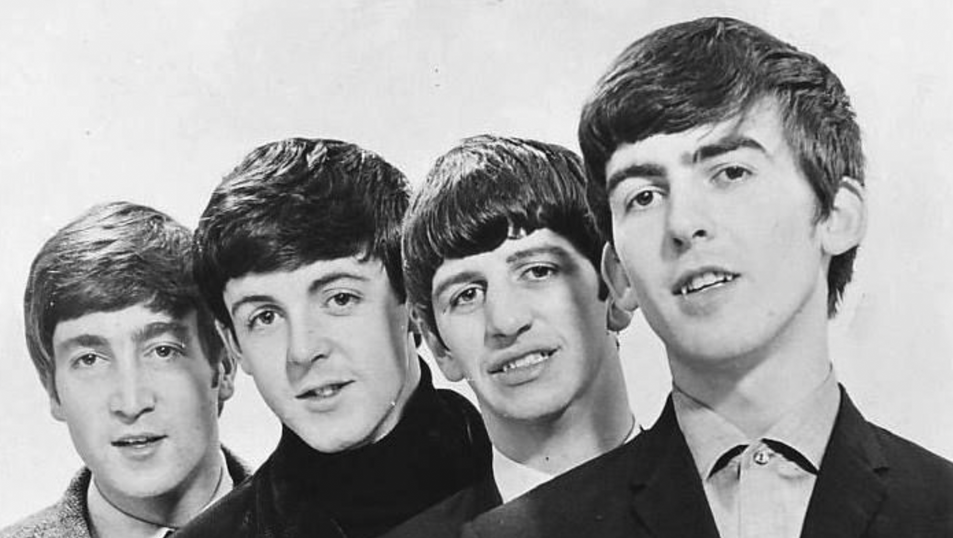
Photo: The Beatles (public domain via Wikimedia Commons)