Follow us

“Wish You Were Here” At 50
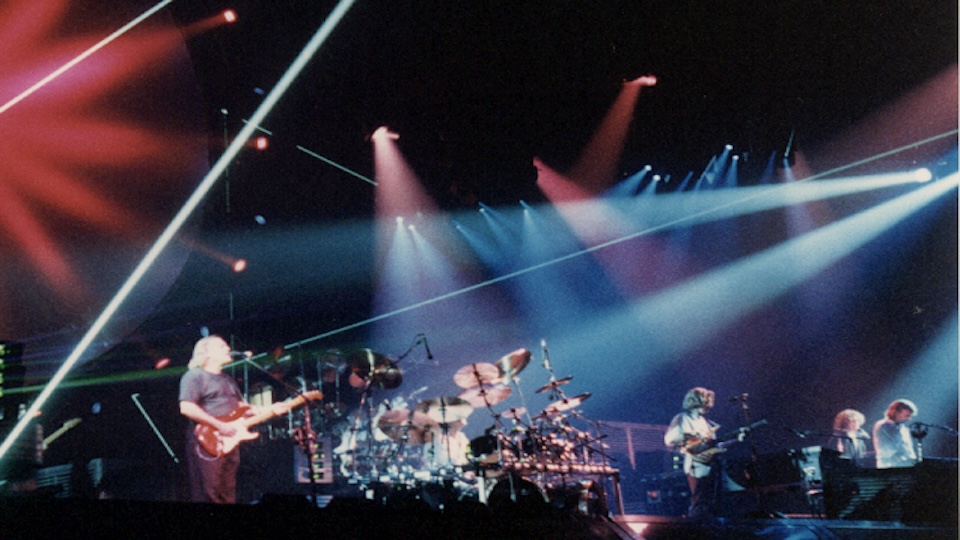
It’s been 50 years since Pink Floyd followed up their blockbuster album Dark Side of the Moon with the stellar Wish You Were Here, released in September 1975. It was a historic period for the band members as they faced the pressures of their uber-success, while balancing the need to indulge in regular life. When the band did eventually get down to work, Wish You Were Here did not disappoint, but it wasn’t without visits from some old ghosts coming back to haunt them.
At that point in their career, it would have been very easy for Floyd to step into Abbey Road Studios and just replicate the winning formula of Dark Side, but the band was determined not to put themselves in the position to be open to such criticism. They took their time, experimented, and found their way over the next 2.5 years. However, they continued to feel a powerful connection to their art and returned to the studio just four months after Dark Side’s release and went right into experimentation.

Not having any unused material from the Dark Side sessions, Floyd had come to a rare moment where they had a “blank sheet” to create upon. Their first idea was to produce an album consisting entirely of sounds not produced by musical instruments, by recording a tape of “Household Object.” Two months were spent recording breaking light bulbs, slamming doors, stroking wine glasses, sawing wood, and stirring bowls of liquid. Beyond sending their studio staff crazy with multiple requests to visit the local hardware store, the results were seen as “musical progress negligible,” according to drummer Nick Mason. “We could sustain the pretense no longer, and the whole project was gently laid to rest.”
For the sessions, Mason described the group’s momentum as “…non-existent. The early days of total commitment were beginning to dissipate. Some of us started families. We were increasingly conscious that life existed outside of the band.” For the rest of 1973, Mason would produce a solo album by Robert Wyatt of Soft Machine, while bassist Roger Waters saturated his days with developing a set of films that would be used for projection behind the band on their upcoming tours.
Meanwhile, guitarist David Gilmour began working as a scout and producer of other talent. He’d recently received an unsolicited tape from a girl who stood out and would continue to support that young talent to the point where the world would know her as Kate Bush.
The band didn’t spend much time in the studio in 1974, choosing several short tours to balance the band’s obligations with the growing family needs of its members. In January 1975, they got down to business on the next album. The tours had brought a change in the band’s internal relationships; Mason described it as “a few niggling differences between us, none significant in their own right.” Yet, the cohesion of the band was less than at any time in their history. Significant royalties from Dark Side began to hit their bank accounts, especially revenue from the publishing end of the business. This posed a debate (for the first time) as to who wrote what and how much each member should receive. They eventually worked out an agreed formula, but not without some rancor.
Despite these tensions, the recording moved ahead with the tune “Shine on You Crazy Diamond” as the opening catapult for the album. The tickling sounds we here on the long opening of “Shine On” are the only remnants used from the “Household Objects” project.
The experimentation theme continued, as they reached out to jazz violinist Stephane Grappelli, who was asked to add something to the developing track “Welcome to the Machine.” Unfortunately, the mix of Rick Wright’s dense synthesizers and Grappelli’s jazzy violin did not work. With his parts removed, “Machine” would be the early release from the album.

Next up was “Have A Cigar,” with its perfect sarcasm and descriptions of the music industry “riding the gravy train” via the huge Dark Side financial wake. Roger Waters was the main writer for the track and would have been the obvious choice to sing the (soon-to-be) iconic tune, but he continued having trouble finding his voice for the song. Fortunately, friend and recording artist Roy Harper was working in an adjacent Abbey Road studio at that time and had stopped in to hear what the Floyds were up to. Soon, they asked Roy to try his talent on the song, and that vocal track remains one of the band’s most endearing.
June 5th,1975, would be a significant day for the band at Abbey Road when a dark, chubby figure appeared with a shaved head and eyebrows. He strolled into the control room of the studio and sat down without introduction. The vacant expression on his face matched his shabby clothes; it took the band a few minutes to realize it was Syd Barrett. He was the main thrust of the band’s early days, front man/singer/guitarist, and writer of their first single, “See Emily Play,” back in June of 1967.
A heavy drug user, Barrett had become erratic by the time of their second album, often known to play one chord for an entire show. Floyd recruited Gilmour and kept Barrett in the background for a few months. In early 1968, the members simply stopped picking him up for gigs, and he faded out of the band.
Legend has it that on that day in June 1975, at Abbey Road, Barrett occupied himself by brushing his teeth in front of the band before they offered to play an early mix of “Shine On You Crazy Diamond,” ironically a song about Syd. Barrett’s response was “It sounds a bit old.”
“Now he didn’t seem like a man who appeared to have any particular friends at all,” Mason recalled. “His conversation was desultory and not entirely sensible. Why he was there, I’ve no idea.” Syd would leave that day without saying goodbye and would pass in 2006 from pancreatic cancer.
Beyond the music, Wish You Were Here’s packaging was iconic. The front cover of two businessmen shaking hands while one is on fire was inspired by art designer Storm Thorgerson. His view was that musicians get burned by the industry, so what could be more symbolic than, upon a deal’s handshake, one of the men burst into flames?
There were 14 original shots taken of professional stuntman Ronnie Rondell on fire in a fireproof suit. The photos were taken at Warner Brothers studio lot in California, but came to a halt on the 15th shot when Rondell suffered minor burns upon a wind shift, singeing his moustache.
Wish You Were Here has sold over 18 million albums as of 2019 and found its way onto Rolling Stone’s list of the 500 greatest albums (#264). David Gilmour has stated that Wish You Were Here remains his favorite Floyd album.
-Steven Valvano
Photo: Paul Carless, CC BY 2.0 <https://creativecommons.org/licenses/by/2.0>, via Wikimedia Commons




Thanks for this. Interesting that the band was trying to make music from samples of household objects – just a few decades ahead of their time. I listen to Wish You Were Here more than their other records, and I think it is as good as anything they produced. The self-indulgent Roger Waters period came after; not to dismiss him, he was as important to the band as anyone, but for me Pink Floyd’s pinnacle was realized with Wish You Were Here.
Thanks Dan… I think it is the album that established “their sound.” As “Dark Side” was a departure from the other 10 or so previous albums, “Wish” nailed down who they would be for the rest of the decade…there is certainly a link from “Wish” to “Animals” and then to “The Wall.” -SV