Follow us

The Athens Music Scene
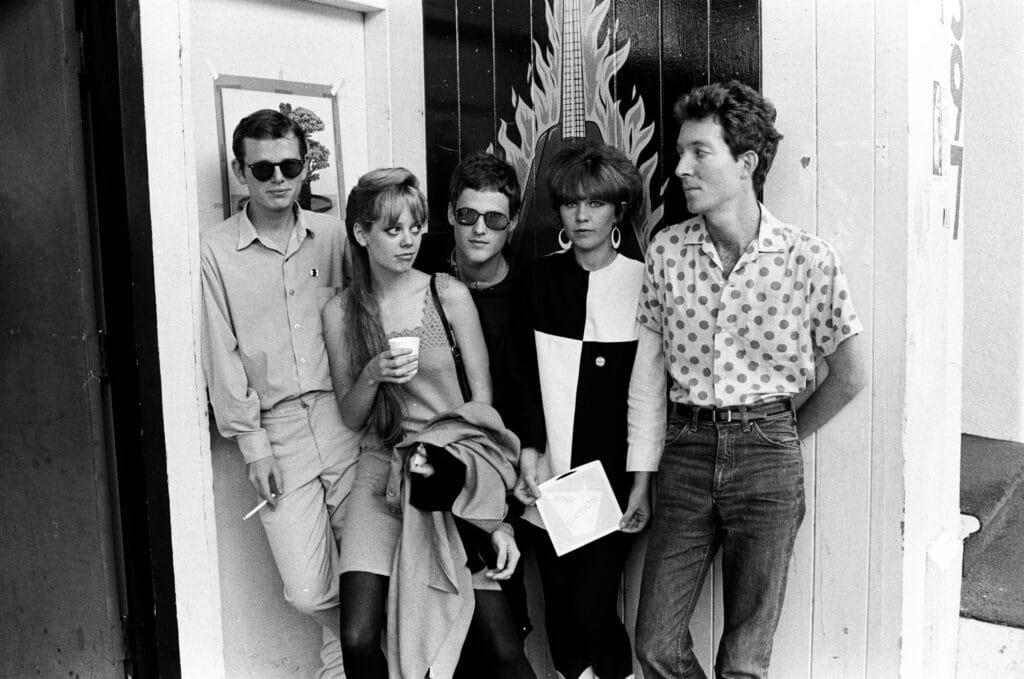
On February 15, 1977, the red dirt of northeast Georgia sprouted something entirely unexpected: a musical revolution. The night before, in the tiny farming town of Athens, a local band called the B-52s had played their first show at a house party on the University of Georgia campus.
By their third show, the band was playing Max’s Kansas City; two shows later, they were headlining, getting the cynical New York punk audience to shake off its too-cool attitude.

With that show, the B-52s, as historian Grace Elizabeth Hale puts in her book Cool Town, “…launched alternative music and changed American culture.” With their DIY ethos and unique brand of recycled American pop culture, they would inspire countless future artists – including a young Dave Grohl and Kurt Cobain, who watched in 1980 as the band played Saturday Night Live. The Bs preempted the “Riot Grrrl” movement and even inspired John Lennon to return to the studio to record what would be his final album.
More than that, they drafted the blueprint for countless other Athens bands – most famous of which was R.E.M. – and gave them the green light to follow. As a result, Athens became, as Hale writes in her book, “the most important model for the new alternative culture rooted in unlikely places.”
“If punk taught people that anyone could play, Athens taught them that this music making could happen anywhere, even in the South, even in small town America,” writes Hale in her book.
The “Athens miracle,” as it’s been called, was born less out of rebellion and more out of desperation for something – anything – to happen, explains Rodger Lyle Brown in his book Party Out of Bounds: The B-52’s, R.E.M. and the Kids Who Rocked Athens, Georgia.
In the late 70s, the town was isolated from almost everything except the collective psychic fallout from the Vietnam War and the ever-tightening grip of social and political conservatism. Boredom, Brown writes, rivaled only the Georgia summer heat for being thick, heavy, and stifling.
Writing music, including their first song and breakthrough hit “Rock Lobster,” was just another way The B-52s entertained themselves and their small group of fellow eccentrics. They’d later wistfully sing about more debauched episodes in their hit “Deadbeat Club.”
By the time Hale arrived in Athens, as a student at UGA, she and her cohort were deliberate about creating their own Bohemia, determined to carve out a new way of life. By then, R.E.M. had, as Brown writes in his book, “redeem[ed] American rock,” and now that same Georgia atmosphere was thick with possibility, Hale explains in her book, “like a substance I could hold in my hand.”
The university boasted the largest library in the southeastern United States and brought the world to Athens’ postage-stamp-sized parameters. There, students and community members alike, including young Athens native Cindy Wilson, future co-lead singer of the B-52s, discovered music, literature, and film from across cultures and eras that they wouldn’t otherwise have had access to — such as the Fellini films that would heavily influence the B-52s’ look and sound.
Fred Schneider had enrolled at UGA in the early ’70s mainly to avoid the draft. Before dropping out, he met William Orten “Ort” Carlton, a true Southern eccentric who gave Schneider a job at his record store, Ort’s Oldies, and single-handedly turned Schneider into, as Brown calls him, “a record nut.”
While working at the store, Schneider accompanied his boss on weekly trips to hunt for the most obscure tracks to add to Ort’s 20,000-strong collection and penciled on his now-iconic, Little Richard-inspired mustache.
Perhaps most influential of all was Athens’ surprisingly thriving underground gay scene.
Of all the influences, though, it seems none was more lasting and profound than that of Jerry Ayers. Athens native and son of a UGA professor, Ayers was a trailblazer in every sense of the word. In his snug velvet pants and fur jackets, he cut a bold path through his small Southern town, which, in the early ‘70s, was made up mainly of frat boys and football fanatics.
His trek to New York City in 1972 forged what would become a thoroughfare between Athens and New York, which countless others, including The B-52s, would soon tread in his wake.
Upon his arrival in NYC, he quickly fell in with Warhol’s Factory crowd, and under the tutelage of Superstars Holly Woodlawn and Jackie Curtis, created his own drag persona, “Silva Thin.”
Returning to Athens in ‘74, Ayers took two of the town’s teenagers, Ricky Wilson and future B-52s drummer Keith Strickland, under his wing, introducing them to his New York crowd. Not only did Ricky and Keith adopt and flaunt their own drag styles, but Wilson was out as gay at 17, a time when Georgia had just repealed its school segregation.
Schneider and future bandmate Kate Pierson moved to a farm outside Athens after traveling around Europe. They regularly raided the local thrift store, where they found castoffs like the teased faux-fur muffs that they wore on their heads as bouffants. This look would become part of the B-52’s signature style, a visual counterpoint to a sound that itself mined the past for odd treasures — surf music, Yoko Ono-inspired screams, and vocals that mimicked the sounds of a B-grade sci-fi movie.
Strickland would later say he felt that not addressing the fact that the band was made up of women and [then privately] gay men who clearly played with concepts of gender was its own subversive act.
“I think it was kind of more revolutionary because of that,” he said in a 2015 interview with Pitchfork magazine. “We were saying it was OK to be different by just living it.”
Athens’ reputation as a bona fide “scene” was solidified so quickly that it soon became its own dominating culture against which to rebel. Michael Stipe vehemently denied any associations with Athens until R.E.M.’s 1983 studio debut, Murmur.
The band, and Stipe in particular, Hale told Georgia Public Broadcasting, helped show a new generation “a different way to be a white Southerner.”
Stipe would eventually embrace his Athens ties, singing Ayers’ praises, in particular, noting the latter’s crucial influence on R.E.M.’s early sound and aesthetic.
“The person that I became, the public persona of Michael Stipe, I owe to him,” Stipe confessed to the Guardian in 2024. “He taught me how to dance, how to laugh at myself, how to dress.”

Looking forward as well as back, Stipe and R.E.M. have long since extended helping hands to up-and-coming Athens bands, helping to build a legacy that is associated as much with the B-52’s and Pylon as it is with bands like Widespread Panic, Neutral Milk Hotel, and Love Tractor.
“Athens is the place that made it clear to young people across the country that you could do something interesting, creative, important wherever you were,” Hale explained. “The place that put no limits on you, even if you stayed in a small place.”
-Marybeth Connaughton
Photo: The B-52s (Getty)





Love this!
REM second only to The Beatles for me.
Hale’s book is a must read now.
Thanks for this brilliant and fun piece, Marybeth!
Good stuff,
I was there, being a native Atlantan and college aged kid from the South I had a front row seat. BTW the South and Rock and Roll are synonymous, I assume you’ve all heard of a guy named Elvis Presley, Johnny Cash, Little Richard and on and on… so Athens was just an update and extension of what had been going on in the South for decades. The South IS rock & roll !