Follow us

Three “Angry Young Men” of the Late ’70s

50 Years ago this month, Graham Parker finished recording his debut album, Howlin’ Wind. His efforts set off a chain reaction in the music world that would support like-minded artists like Elvis Costello and Joe Jackson.
Although they were only loosely connected through the London music scene, the three artists would share a lyrical and emotional tone of what would become known as “the three angry young men” of a new creative music genre soon to be pegged as “New Wave.”

Graham Parker
The “Pub Rock” movement of the middle 70s was a back-to-basics R&B backlash reaction to progressive super groups like Pink Floyd, Yes, and ELP (and before Punk took over this mantle).
Pub Rock would sprout Squeeze, Ian Dury, Chilli Willi, Ducks Deluxe, and the London Pub standard bearer Brinsley Schwarz. In the middle of this was singer-songwriter Graham Parker, who quickly became an instant favorite of the English press and, likewise, for those yearning for a back-to-basics R&B sound.
Parker’s band, The Rumour, would come together through manager Dave Robinson, who had the connections to pull in three ex-players from Ducks and Brinsley Schwarz. Parker’s producer for the debut album would be Nick Lowe (Brinsley’s bass player), who would soon have his own solo career. The record company heard Parker as a new, “harder” Van Morrison, singing R&B with horns and a big beat backing. The “hard” part was his biting lyrics and emotional tone. Parker was prepared to tell off the world, with tracks like “Not If It Pleases Me”:
Parker went on to a lofty career, peaking with1979’s Squeezing Out Sparks. A best-seller and favorite of the critics, he dropped the horns in exchange for a harder 3-guitar presence (several journalists accused him of going “punk” at the time). However, he continued to let the world (and the girl) know where he stood. As in the epic track “Passion Is No Ordinary Word.”
Elvis Costello
Right behind Parker was Declan MacManus, who’d been playing pubs as part of a band called Flip City. Right from his musical beginning, Elvis Costello had a connection with Parker and The Rumour, as he described in his 2015 biography Unfaithful Music & Disappearing Ink. Often attending Brinsley Schwarz shows at the famed Hope and Anchor pub in London, Costello and his bandmates decided “Everything we [Flip City] attempted to do as a group was based on Brinsley Schwarz’s blueprint.”
This included eventually breaking away from Flip City and becoming “Elvis Costello” by literally handing a demo tape to Jake Rivera (the manager of Chili Willi). Rivera was creating an independent label called Stiff Records and liked what he heard. Rivera was instrumental in grabbing Chili’s drummer, Pete Thomas, to join Elvis, who was subsequently recruiting for his backing band, The Attractions.
Completing the circle, Nick Lowe would be signed by Stiff for his own solo career while performing as the producer for Costello’s first five albums.
EC always had a way of conveying a bit more anger than his peers; this included sometimes being misinterpreted. In his biography, he states that the wide space between his two front teeth “had the effect of making half of what I say sound like a provocation or an insult.” That may be so, but his early lyrics sent a message to the world that there was some anger to be dealt with, such as in the track “This Year’s Girl.”
Costello has hinted that his management created the storyline that he suffered from a history of lovers’ betrayal while being outraged by the world in general (“I used to be disgusted, but now I’m amused”).
In his early days, this was a successful strategy, but over his 50+ year career, Elvis would sing about many other topics. An increasing number of his works fell into the categories of sentimental, self-reflective, and even loving. Check out “My Three Sons” from 2008’s Momofuku album. Here, the once-angry young man sings about his loving boys and his understanding of humility as a father.
Joe Jackson
In another part of the UK (the Paulsgrove area of Portsmouth), a 16-year-old prodigy keyboardist/writer named David Jackson was already playing to pub crowds. Changing his name to “Joe,” he took the money earned from time spent performing on the cabaret circuit to make a demo with his rock-reggae band. Record producer David Kershenbaum heard the demo, quickly signed him to A&M Records, and produced Jackson’s first album, Look Sharp.
Although when compared to his contemporaries, he had the tone of least “angry,” Joe Jackson came out of the chute with 1978’s Look Sharp. It had a slicing guitar sound with rage levels that would make the punks proud. Although Look Sharp’s songs were tremendously melodic, there was anger there:
Jackson has said, “In retrospect, it’s kind of a stinker. It’s embarrassing, I mean, that’s kind of lame. It’s just childish and silly and derivative, but I was 22 when I wrote it.”

Jackson had an advantage over his peers in the “anger” department, as his voice had a natural loneliness to it. This made his ire more palatable; one could actually feel sorry for the troubled performer. This is painfully apparent in his big hit “It’s Different for Girls.” Many listeners found empathy in his storyline:
“I know, a lot of things that you don’t/You want to hear some?
She said, just give me something, anything/Well, give me all you got, but not love
No, not love, she said/Don’t you know that it’s different for girls?”
By 1982, Jackson was a world beater, topping the charts with his Night and Day album that launched his international hit “Stepping Out.” Although generally a sunny album, Jackson still showed he was tackling the old anger with songs like “Real Men.”
“What’s a man now, what’s a man mean/Is he rough or is he rugged
Is he cultural and clean/Now it’s all changed, it’s got to change more
Cause we think it’s getting better/But nobody’s really sure.”
-Steven Valvano
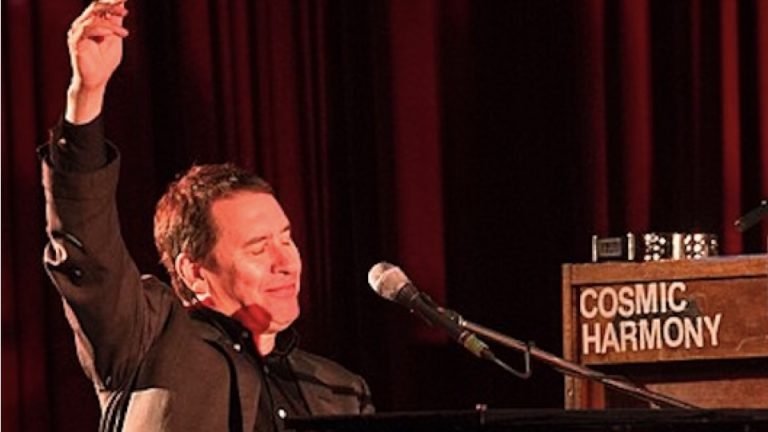
Photo: Joe Jackson (Getty)