Follow us

Jools Holland: Good Vibes for Cranky Times
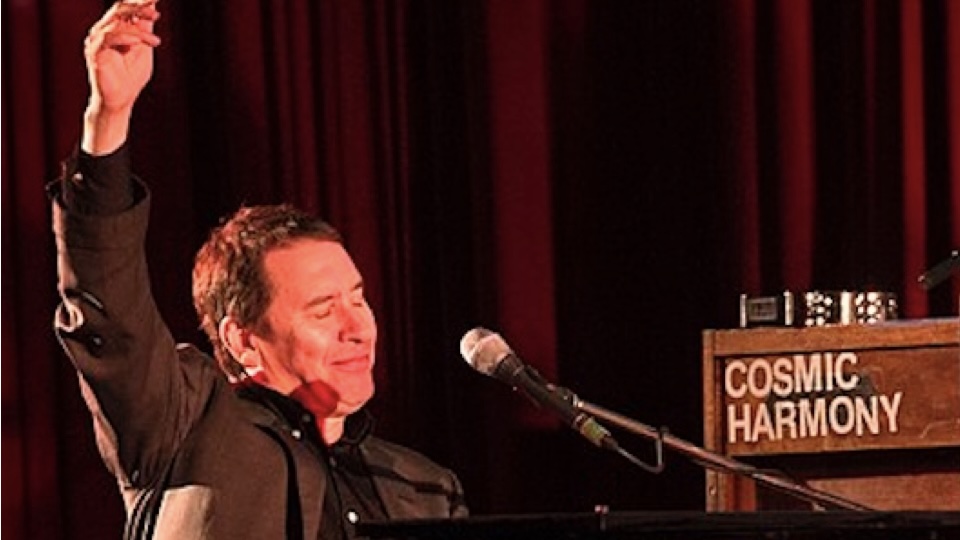
Few musicians have shaped the soundscape of modern music culture as profoundly—or as joyfully—as Jools Holland. For decades, he has been a pianist, bandleader, broadcaster, curator, and champion of artists across genres and generations. His work radiates a kind of musical hospitality: a sense that the door is always open, the piano is always vibing, and the night is always young.
Here are five reasons Jools Holland remains one of the most beloved figures in contemporary music.
- His unmistakable piano style
Jools Holland’s piano playing is instantly recognizable: a rolling, percussive, boogie‑woogie pulse that feels both timeless and mischievous. It’s the sound of a musician who learned the rules early and then gleefully bent them into his own language.
Musicologists often point out that Holland’s playing carries echoes of Albert Ammons, Meade Lux Lewis, and Dr. John. But what distinguishes him is the way he modernizes those influences. His performances feel less like nostalgia and more like a living tradition being pushed forward.
In an era when digital production dominates, Holland’s piano remains defiantly analog — a reminder of the physicality and athleticism of musicianship.
There’s also a generosity in his playing. Even when he’s front and center, he leaves space for others. His piano becomes a conversation rather than a monologue. That’s rare. And it’s part of why musicians love sharing a stage with him.

- His role as a champion of live music
Long before streaming flattened the musical landscape, Jools Holland understood the irreplaceable electricity of live performance. His flagship show, Later… with Jools Holland, has become a cultural institution precisely because it reveres live music.
When the show premiered in 1992, it was an anomaly: a late‑night music program that refused to rely on lip‑syncing, pre‑recorded tracks, or flashy staging. Instead, it presented artists in the round, performing live, often with only a few feet separating them.
The format is deceptively simple, but the effect is profound. It removes the artifice of typical TV performances and replaces it with something intimate, immediate, and communal.
Over the years, Later… has broken artists (Adele, Arctic Monkeys, Amy Winehouse), revived careers (R.E.M., PJ Harvey), and offered a platform to global musicians who rarely appear on Western television.
Industry insiders often credit Holland with creating a “neutral zone” where artists who might never share a bill can coexist. A typical episode of Later… might feature a grime MC, a folk trio, a jazz pianist, and a veteran soul singer — all treated with equal respect.
Holland’s gift is knowing how to orchestrate these moments—pairing unexpected genres, contrasting textures, and creating collisions that spark new appreciation.
In an era of algorithmic discovery, he remains one of the last great human curators.
- His ability to bridge generations and genres
Jools Holland is a musical diplomat. Few figures move as effortlessly between worlds—punk and jazz, soul and ska, classical and rockabilly. His collaborations read like a map of modern music: George Harrison, Amy Winehouse, Dr. John, Mavis Staples, Sting, Ruby Turner, Olivia Dean and countless others.
What’s remarkable is how naturally he adapts. He never dilutes his own voice, yet he never overshadows his collaborators. Instead, he amplifies them. He listens. He responds. He elevates.
This cross‑generational, cross‑genre fluency is more than a skill—it’s a philosophy. Holland treats music as a shared language, one that becomes richer the more dialects you learn. His work reminds us that musical borders are porous, and that great art often emerges from unexpected intersections.
- His Big Band: a living, breathing musical organism
The Jools Holland Rhythm & Blues Orchestra is one of the most joyful ensembles touring today. It’s not just a band—it’s a celebration of collective musicianship.
The orchestra’s sound is lush, brassy, and irresistibly alive. It channels the spirit of classic R&B and swing while feeling thoroughly contemporary. Part of the magic comes from the musicians themselves, many of whom have been with Holland for decades. There’s a familial energy onstage: glances, grins, and unspoken cues that only come from years of shared rhythm.
And then there’s Ruby Turner, whose voice could raise the roof of any venue on earth. Her partnership with Holland is one of the great musical alliances of the last 30 years—fiery, soulful, and full of mutual respect.
The orchestra serves as a counterweight to the often-solitary, laptop‑driven production that dominates modern pop. It’s a reminder that music can still be a collective act — loud, joyful, and built on interplay.

- His unwavering commitment to joy
Perhaps the most enduring reason to love Jools Holland is the simplest: he radiates joy.
Whether he’s hammering out a boogie‑woogie riff, introducing a young artist on Later…, or leading a New Year’s Eve Hootenanny, Holland exudes a kind of musical optimism. He makes the audience feel like they’re part of something—something warm, communal, and deeply human.
In a world that often feels fragmented, Holland’s work is a reminder of what music can do at its best: bring people together, spark curiosity, and create moments of shared delight.
His joy is not naïve. It’s earned. It’s crafted. It’s the product of decades spent honoring the craft, respecting the lineage, and nurturing the next generation.
And that joy is contagious.
Bonus Reason #6. Squeeze.
Many of us first encountered Jools when he was a member of the beloved Squeeze. He brought a perfect mix of sardonic humor, superb musicianship, and general bonhomie to the band. The band carried on nobly, and successfully, without him – but it was never really the same.
He recently re-united, quite stylishly, with frontmen Chris Difford and Glenn Tilbrook to inaugurate the latest season of his BBC series, Later. The result is unsurprisingly masterful.
His lifelong friendship with, and devotion to, drummer Gilson Lavis is another admirable Squeeze legacy.

When all is said and done, Jools Holland is more than a musician or a broadcaster—he’s a cultural steward. His piano style, his championing of live performance, his genre‑spanning collaborations, his powerhouse orchestra, and his unwavering joy have made him a beloved figure across the world.
In celebrating him, we’re also celebrating the power of music itself: its ability to connect, uplift, and surprise us. Holland has spent his life creating spaces where those moments can happen. And for that, he remains one of the most cherished voices in modern music.
-Al Cattabiani
PhotoL InfoGibraltar, CC BY 2.0 via Wikimedia Commons





Beautifully expressed & so comprehensive! Kudos to the great Jools Holland, Al, & thank you for this. I have his glorious duet with Billy Preston, “I’m Looking Through You,” on a frequent loop. He is indeed a joy in perpetuity.
A perpetual joy, indeed!
Gilson died last year
Indeed. His close relationship with Jools was one of the inspirations for this post!