Follow us

How the 1970s New York Punk Scene Redefined Modern Songwriting Standards
By the mid‑1970s, rock music had gotten… well, a little too pleased with itself. Songs stretched on forever, solos became athletic events, and concept albums tried to out‑mythologize each other. If you weren’t singing about ancient civilizations or cosmic journeys, were you even trying? Rock had become a kind of intellectual obstacle course, and if you didn’t have the patience for a triple‑gatefold concept record, you were out of luck.
Then, almost quietly, New York stepped in and said, “Enough.”
In a handful of dingy clubs — CBGB, Max’s Kansas City, and a few others that smelled like beer, sweat, and possibility — a new generation of musicians started stripping rock back to its bones. They weren’t trying to out‑play anyone. They weren’t trying to impress conservatory students. They were trying to reconnect with the spark that made rock matter in the first place. And in doing so, they ended up rewriting the rules of modern songwriting.
The Ramones and the Art of Radical Simplicity
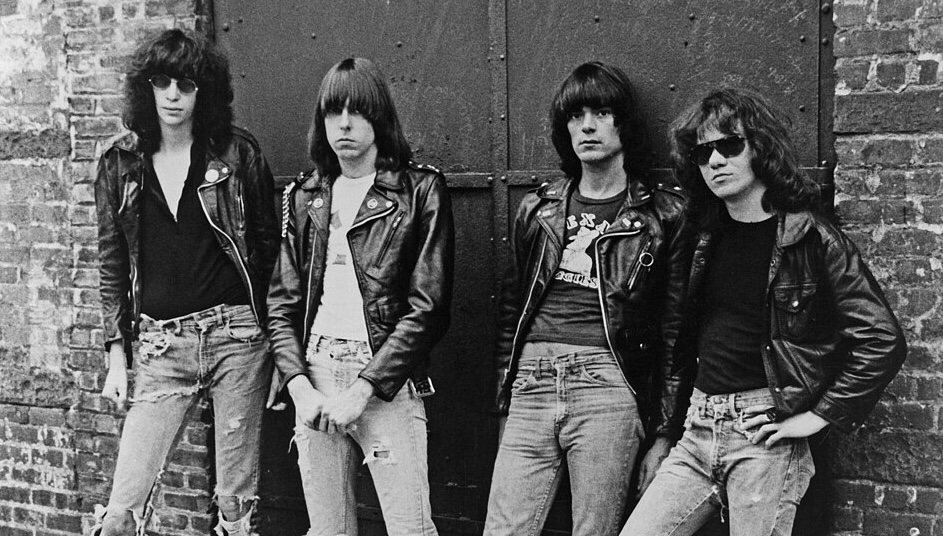
The Ramones were the first shock to the system. They walked onstage with leather jackets, bowl haircuts, and songs that barely lasted long enough to finish a drink. But those songs were a revelation. They were fast, loud, and unapologetically simple — not simple as in “basic,” but simple as in “essential.” The Ramones understood something that rock had forgotten: a song doesn’t need to be complicated to be powerful. It just needs to hit you in the chest.
Their approach was almost architectural. They removed every unnecessary beam and decorative flourish until only the load‑bearing elements remained. Most of their tracks clocked in around two minutes, and that brevity wasn’t laziness. It was discipline. They got to the hook immediately, rode it hard, and bailed before the idea wore out its welcome. In a weird way, they anticipated the streaming era decades before it existed. Today’s pop songs — the ones that grab you in the first ten seconds — owe a quiet debt to the Ramones’ ruthless efficiency.
Television and the Beauty of Restraint
If the Ramones were the blunt instrument of the New York scene, Television was the precision tool. Tom Verlaine and Richard Lloyd were guitarists who could absolutely shred, but they chose not to. Instead, they built songs around interlocking guitar lines that felt like conversations — bright, wiry, and strangely elegant. Their music was complex, but never indulgent. Long, but never bloated. “Marquee Moon” didn’t need a cape or a fog machine to feel epic; it just needed two guitars weaving around each other like they were discovering the song in real time.
Television proved that punk didn’t have to be simplistic. It just had to be intentional. Their influence is all over modern indie rock — the clean, chiming guitars of R.E.M., the angular riffs of Sonic Youth, the downtown cool of The Strokes. Even newer bands like Parquet Courts and Fontaines D.C. are basically carrying the Television torch, mixing nervous energy with melodic intelligence.

Patti Smith, Richard Hell, and Punk’s New Emotional Vocabulary
Meanwhile, Patti Smith and Richard Hell were redefining punk’s emotional vocabulary. Smith brought poetry into the mix — not the flowery kind, but the raw, Beat‑inspired kind that felt like it was scribbled in a notebook at 3 a.m. She didn’t simplify language; she liberated it. Her songs felt like street sermons, half‑sung and half‑spoken, full of urgency and vision. You can hear her influence in artists like PJ Harvey, Sharon Van Etten, and Mitski, all of whom treat lyrics as something more than decoration.
Hell, on the other hand, embraced imperfection as a philosophy. His writing was vulnerable, cynical, and self‑aware — a kind of anti‑poetry that made room for doubt and insecurity. He didn’t pretend to have answers. He barely pretended to have questions. That attitude became a blueprint for generations of indie misfits, from Courtney Barnett’s deadpan wit to Kurt Vile’s slacker introspection.

The Blueprint That Never Went Away
What made the New York punk scene so transformative wasn’t just the sound. It was the shift in priorities. Rock had spent years trying to get bigger — bigger ideas, bigger solos, bigger productions. Punk made everything smaller, but sharper. It reasserted the idea that immediacy was a virtue. That rhythm could matter more than harmony. That a lyric didn’t need to be ornate to be honest. That imperfection could be a feature, not a flaw.
And those ideas stuck.
Look at modern songwriting, and you’ll see the fingerprints everywhere. Songs are shorter now, hooks arrive faster, and the emotional tone is more conversational. The Strokes revived New York minimalism for the 2000s, turning Television’s guitar interplay into something sleek and stylish. Parquet Courts took the Richard Hell approach — witty, restless, and slightly neurotic.
IDLES and Fontaines D.C. brought back punk’s urgency, proving that raw emotion still hits harder than polish.
But the influence goes even wider than the usual suspects. You can hear the Ramones’ DNA in the way Olivia Rodrigo structures her punchiest songs — quick setups, fast payoffs, no wasted motion.
Wet Leg’s deadpan humor, clipped phrasing, and minimalist arrangements could easily slot into a 1977 setlist without anyone blinking.
Even artists who don’t sound “punk” on the surface are borrowing from the blueprint. Phoebe Bridgers uses lyrical directness that Patti Smith would absolutely recognize — the kind of emotional clarity that doesn’t hide behind metaphor. Mitski channels that same spirit, but with a theatrical twist, turning vulnerability into something sharp and confrontational. And then there’s Turnstile, who’ve taken punk’s rhythmic urgency and blown it open into something euphoric and genre‑bending, proving that the original ethos still has room to evolve.
The indie world is practically built on Television’s guitar logic. Bands like Real Estate, DIIV, and Beach Fossils all use that bright, interlocking guitar language — not copying it, but inheriting it. You can hear the lineage in the way their riffs glide rather than stomp, how they create tension through space instead of density. It’s the same architectural thinking Verlaine used, just filtered through a dreamier lens.
Even hip‑hop and pop borrow from punk’s structural rebellion. The rise of the two‑minute song — the kind that hits hard, says its piece, and leaves — is pure Ramones energy. The conversational, diary‑entry lyricism dominating modern playlists? That’s Patti Smith’s spirit, whispering in the margins. The DIY production aesthetic of bedroom pop? That’s punk’s “use what you have” philosophy, reborn for laptops instead of four‑tracks.
The point is: punk didn’t just influence punk. It influenced the entire idea of what a song could be.

Why This Era Still Feels Like the Future
The 1970s New York punk scene wasn’t just a moment. It was a correction. It reminded musicians that songs don’t need to be complicated to be meaningful. They don’t need to be long to be powerful. They don’t need to be perfect to be unforgettable. In a world where authenticity is currency and attention spans are short, the punk ethos feels more relevant than ever.
Bands like The Ramones and Television didn’t just redefine songwriting for their time. They created a blueprint that modern artists continue to refine, reinterpret, and rediscover. The underground became the foundation. The misfits became the architects. And the songs — short, sharp, and stubbornly alive — still sound like the future.
-Al Cattabiani
Photo: The Ramones by Michael Ochs Archives/Getty Images