Follow us

Forgotten Influencers of Rock
In a 2019 New York Times interview, Conan O’Brien was not duly impressed with his fame, grimly noting, “Eventually, all our graves go unattended.” And sadly, that applies to some forgotten artists who helped lay the underpinnings of rock.

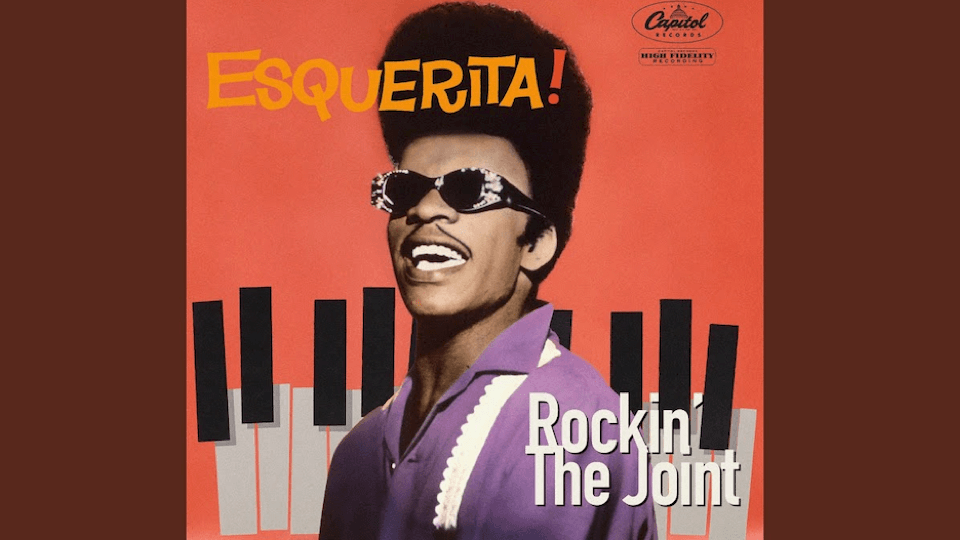
The first case in point: Little Richard justifiably referred to himself as “the innovator, the originator, the emancipator, and the architect of rock & roll!” But like any architect, Mr. Penniman learned his craft from a master of the trade. In Richard’s case, Steven Quincy Reeder, Jr. was a loud and proud piano pounder who went by the stage name of “Esquerita” and often appeared in public as he appeared on a stage, wearing sunglasses, heavy makeup, and not one but two wigs piled atop each other.
In a 1986 interview on the BBC’s Morning Becomes Eclectic, Little Richard confessed, “I met him at the bus station. One night I couldn’t sleep…I would sit there all night and watch people get off the bus, and he got off and I said ‘Ohhhhh boy!’”
Richard confessed he’d frequent the bus station “…trying to catch something. You know, have sex.” After picking Esquerita up, Richard picked his brain, admitting “he and this fellow named James taught me how to play piano.” In his autobiography, The Life and Times of Little Richard: The Quasar of Rock, Richard gushed, “Esquerita was one of the greatest pianists, and that’s including Jerry Lee Lewis and Stevie Wonder. I learned a whole lot about phrasing from him. He really taught me a lot.”
In 1957, after Richard found God and lost his desire to record, rockabilly star Gene Vincent recommended Esquerita to Capitol Records. Unfortunately, his debut album, Esquerita! caused potential record buyers to yawn. Changing his name to the “Magnificent Milochi” did not change his luck. He struggled to keep out of jail, occasionally landing in Riker’s Island. Blues singer Joe Turner derisively gave the musician another name: “Give me money, give me money, Esquerita.”
Towards the end of his life, Esquerita was washing windshields in Brooklyn to feed his drug habit. Sadly, he died from AIDS at 48. His body wasn’t claimed, and he was laid to rest on Hart Island, where one million bodies are buried in unmarked graves.
In 1959, the same year Esquerita’s album dropped, Dave “Baby” Cortez unleashed the first instrumental rock song to reach #1 on the Billboard charts. His groundbreaking tune took the sound of an organ out of the church and into the rock world.
Cortez’ “The Happy Organ” accidentally came about when Dave spotted an instrument in a recording studio. He recalled, “Usually in the studio, they have the Hammond organ covered up. People weren’t using it then, except in gospel. I said, ‘Can I try that over there?’”
The record industry’s creative accounting later embittered Cortez and he became a recluse in his Queens apartment. His daughter, Taryn Sheffield, stated that her last conversation with her father was in 2009. Thirteen years later, she learned he died when the music rights organization, BMI, contacted her and told her they were looking for his next of kin. Cortez’s unclaimed body was also buried on Hart’s Island.

Lou Reed met Richard (Rachel) Humphreys in a drag bar as Humphreys was wearing make-up and a dress. Lou name-checked Rachel in “Coney Island Baby” (“I want to send this one out to Lou and Rachel”).
So began a three-year relationship, commemorated with Rachel’s painted image gracing Lou’s Sally Can’t Dance cover and photographs of the pair on the cover of Reed’s Walk on the Wild Side: The Best of Lou Reed.
Steve Katz, Reed’s producer, remembered, “Rachel used to wear razor blades taped to her dress, just in case she had a bad experience. I think she was very healthy for Lou.” The pair parted when drug-fueled fights about Rachel wanting to undergo transgender surgery became too frequent, with Lou pleading, “Why are you doing that? I love you because of the way you are.”
Reed’s guitarist, Jeff Ross, noted, “I may have been one of the last people who knew Lou who had seen Rachel. I happened to bump into her on the street years later. She gave me a big hug and was not in a great place.” Rachel, who had been living under NYC’s West Side Highway, died of AIDS at age 37 and was buried in an unmarked grave.
At the time of Jackie Wilson’s death, “Mr. Entertainment” was penniless due to a shifty manager, tax debts, and a heart attack that put him into a coma for nine years. In 1984, he died at 49. For three years, his grave was unmarked.
Michael Jackson paid for Wilson’s funeral. And, thanks to an Orlando, Florida DJ’s fundraising efforts, a mausoleum was finally built for Wilson.
If only mausoleums could be placed over these unknown influencers’ graves to include Jackie’s words: “And now, no more lonely teardrops.”
-Mark Daponte
Photo: Fair use image of the Esquerita album cover




Jackie Wilson deserved so much better. What a voice.