Follow us

“Billy Idol Should Be Dead”: The Rebel Yells
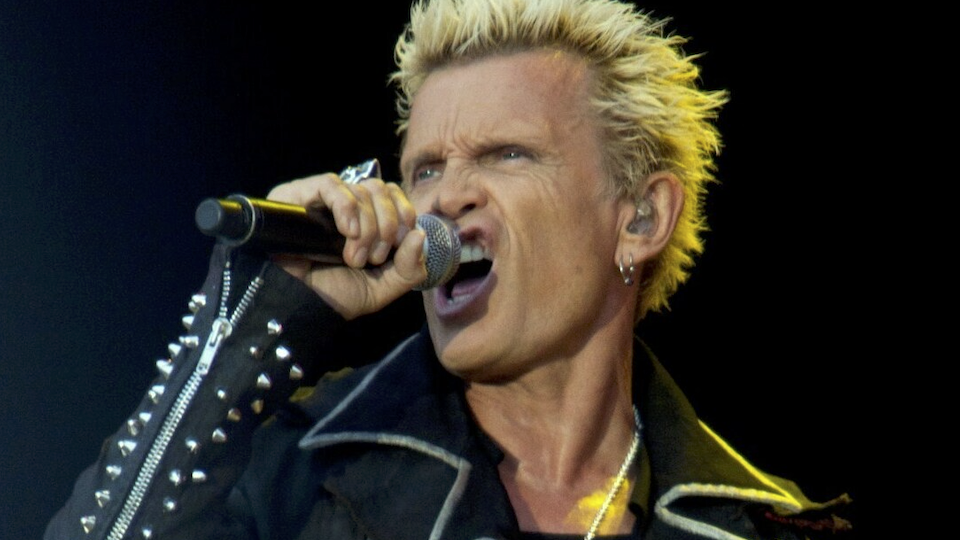
In the 80s, Billy Idol – he of the bleached hair, fist pump, and trademark snarl – was everywhere. He’d arrived at the perfect time: the hardcore punk of the 70s had started to evolve into something a wee bit more polished. On top of that, the brand-new MTV was in dire need of content to fill its 24/7 channel.
Like Madonna and Cyndi Lauper, Idol was the perfect mix of hooks and edgy visuals. But the wild ride nearly killed him. A recent documentary on Hulu is called Billy Idol Should Be Dead. The troubling story of his rise is a tale we’ve seen all too often in popular culture. His redemption is both funny and a testament to his decidedly middle-class upbringing that knew star-tripping bullshit when it saw it.

Idol was born William Broad, the son of a top salesman. He wryly notes that he’s a salesman as well, with “Billy Idol” being the product. He came of age at a time when England was in economic free fall, and teens were keenly aware that there was literally no future for them. The era birthed the punk movement, and like many, the Sex Pistols were a magnet for Billy. He soon joined a band; the documentary shows his early “look”, a black haircut that resembled that of Mr. Spock.
Idol was part of a group of kids rotating in and out of bands: the aforementioned Pistols, Siouxsie Sioux, Pete Shelley, and the like. With Generation X, he discovered he could write catchy songs like “Dancing with Myself.”
At the time, Marc Bolan of T. Rex had his own edgy TV show. He invited Generation X to perform. Just days after taping, he suffered his fatal car accident. However, the show aired later, prompting a morbid curiosity among viewers – and greatly increasing exposure.
In 1981, Billy went to New York to see if he could crack America on his own. He admits that he basically hijacked Generation X’s hit “Dancing with Myself” to start a solo career. In the documentary, those who worked with him early on noted how quiet he was. But it didn’t take long for him to fall into the club scene of the time. Nile Rodgers notes a memorable night when Idol nearly barfed on David Bowie, which Bowie thought was hysterical.
The hits followed: “White Wedding” featuring his girlfriend, Perri Lister, as a crazy bride. Then came Rebel Yell (the title track rumored to be inspired by 80s actress Demi Moore), which spawned four hits.
His management had paired him with guitarist Steve Stevens, who, on paper, was not an obvious fit — more hard rock than punk–– but the partnership has proven fruitful.
By 1983, his success was at an all-time high, but he needed drugs and booze to “fuel” that snarling persona. His dealer literally moved into the apartment next door.
In an effort to start fresh, he moved to L.A., but despite the sunshine, “the scene” followed him. When his longtime partner, Lister, gave birth to their son Willem in 1988, he made a desperate attempt to get clean from heroin… by smoking crack.
On an especially wild trip to Thailand, he was so gakked up, he passed out in a hotel elevator. The doors opened on Mel Gibson and his family staring aghast at a collapsed rock star. He had to be, um, “escorted” out of the country by the army.
Back in LA, a motorcycle accident nearly killed him and almost led to the loss of his leg. He did the video for his 1990 hit, “Cradle of Love,” in a wheelchair.

The sophisticated “mechanics” that healed his leg were the inspiration for 1993’s experimental Cyberpunk. In hindsight, it teased the coming tech boom, but it was a little too soon, and it flopped.
For much of the 90s, he largely focused on his personal life. He parodied his wild persona in 1998’s The Wedding Singer.
Now 70, Idol has aged into the coolest grandfather ever. One scene in the documentary shows him crawling around inside a fairy-princess fort with his granddaughter.
For one who has long relied on a trademark “look” and sneer, Idol has maintained it surprisingly well. Even when he had to use a cane after his accident, he made it “punk.” He’s found a way to wear the persona by not trying to be 20 anymore – but embracing his love of music and a bemused recognition of the image he’s created.
In short, he doesn’t take himself too seriously.
Billy Idol Should Be Dead is honest, fun, and a fascinating look at a man who nearly fell off the edge into parody (and worse) but found his way back doing what he loves.
-Cindy Grogan
Photo: Billy Idol, 2012 (possan via Wikimedia Commons)