Follow us

Joni’s (and Our) Story in 10 Songs

On a summer night in 1975, I fell in love with Joni Mitchell. I was driving my mother’s enormous Buick around my small town when one of Joni’s songs came drifting over from a Baltimore radio station. I literally pulled over to listen to it (for the record, it was “Shades of Scarlett Conquering” from The Hissing of Summer Lawns). I had heard of Mitchell, but this song absolutely grabbed me and established a lifelong love of her music.
I am older now than I was on that summer night, but Mitchell’s music has informed my life through the years. I know other women “of a certain age” likely feel the same. Her lived experience reflects much of our own, although she’s had more of a spotlight and more famous friends.
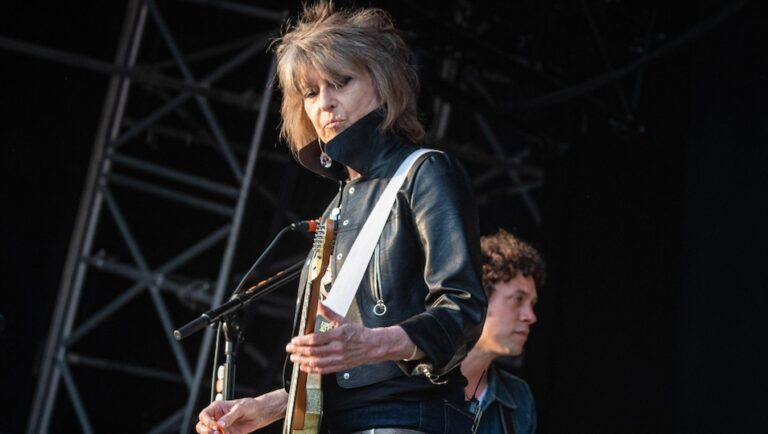
Joni has written something in the neighborhood of 270 songs. But to me, these ten are essential mile-markers in her journey across almost 84 years.

CACTUS TREE/Song to a Seagull, 1968
By the time of her debut album, Mitchell had been married and divorced, given up a child, and was eking out a paltry living in the coffeehouses around Canada. She had experienced a taste of the rigid traditional life her parents were expecting and was chafing under it. “Cactus Tree” is a gorgeous ode to her hunger for complete independence.
CHELSEA MORNING/Clouds, 1969
On her second album, Mitchell’s crystalline mezzo-soprano is in perfect form, singing joyously about the promise of a new day. It reflects that feeling of a kid waking up on the first day of summer vacation. The infectious track showcases the optimism of a 26-year-old experiencing the excitement of a blossoming career that’s taking off.
RIVER/Blue, 1971
By the time of her classic Blue, Joni had been in a few relationships. This deeply personal confessional is known for many tracks, but “River” sums up the soul-deep ache of losing one of her first truly significant relationships (Graham Nash). All of us can relate to the feelings around that First Great Loss.
THE LAST TIME I SAW RICHARD/Blue, 1971
Another meditation on the pitfalls of relationships. At 28, Mitchell was building up a few callouses on her heart, and recognized the same in an old friend from her folk-singing days.
There’s a certain jaded humor in the truth of her lyrics. I mean, how many friends have we nursed through a bad breakup? And yet, we still hope.
“The last time I saw Richard was Detroit in 68/And he told me all romantics meet the same fate someday/Cynical, and drunk, and boring, someone in some dark café.”
SAME SITUATION/Court and Spark, 1974
One of the reasons that Joni spoke to women (and men, for that matter) was her brutally honest, insightful observations about what we go through to make that ultimate connection. At 31, she had fallen in and out of love a few times. And like many 30-somethings, she remained both hopeful and slightly embarrassed at what we tolerate in order to find The One. You know better, but the emotional push/pull frequently overrides both logic and self-respect.

FOR THE ROSES/For the Roses, 1972
At this point, Joni was enjoying some success and could recognize the pitfalls as her then-lover James Taylor was climbing the same ranks. This track balances her conflict between enjoying the fruits of fame (“I guess I seem ungrateful with my teeth sunk in the hand/That brings me these things I really can’t give up just yet”) and the cynical nature of the business. (“Oh, the power and the glory/Just when you’re getting a taste for worship/They start bringing out the hammers/And the boards and the nails”).
It’s that inflection point on the job climb, wondering if we’re losing our idealistic goals to the perks of ambition.
THE BOHO DANCE/The Hissing of Summer Lawns, 1975
By 1975, Joni was a “name.” She was never comfortable with fame, and this track reflects her desire to keep finding inspiration minus the filter of her celebrity status (“I was a hopeful in rooms like this/When I was working cheap”).
She was seeking the Authentic, which was getting harder to find. Plus, she was trying to come to terms with her nice lifestyle, which some would think was incongruous with being a “true” artist. You either starve, or you’re a sell-out. No in-between.
“Don’t you get sensitive on me/’Cause I know you’re just too proud
You couldn’t step outside the Boho dance now/ Even if good fortune allowed”
REFUGE OF THE ROADS/Hejira, 1976
The album Hejira was inspired by a cross-country road trip Mitchell took during a painful breakup. She packed up her Mercedes, traveling east to west (with some coastal detours), and recording stripped-down tracks. Mitchell was seeking solace from heartache by escaping, trying to recapture the independent spirit that had loomed large in this girl from the Canadian prairie. And she’s having adventures along the way with total strangers.
Even as she recognizes her internal growth, she also finds herself slipping into old habits. One step forward, a half-step back.
“It was all so light and easy/Till I started analyzing
And I brought on my old ways/A thunderhead of judgment was gathering in my gaze”
Joni Mitchell’s Astonishing Comeback
THIS PLACE/Shine, 2007
Fast forward past a few Grammys and other awards. Joni has been famously open about her disdain for the demands and hustle of the music industry. For several years, she stepped away from recording altogether and lived a quiet life. However, around 2006-2007, she suddenly felt the urge to make music again, sitting down at the piano and sketching out the tracks that would appear on Shine (her last studio album).
“This Place” reflects a deep contentment in life in middle/old age – just enjoying her neighbors and the beautiful landscape around her property. It also works in the environmental causes she’s been passionate about since the days of “Big Yellow Taxi” in 1970.
It’s a simple song, echoing the feeling of being happily retired, filling one’s days with the things one truly loves. The hustle is over.
BOTH SIDES NOW
This classic was one of Joni’s first, featured on her debut album. Judy Collins made it a hit in 1968. The lyrics belie a wisdom beyond Mitchell’s years at the time. It’s since become a signature piece in her later life (used to perfection in a scene in Love, Actually where Emma Thompson breaks down at the discovery of her husband’s affair after years together).
Somehow, hearing it – not in the pure, sweet tones of her 25-year-old voice, but the smoky, lower register of later years –adds a weary layer of truth. She – like the rest of us – has seen a few things. It’s a perfect bookend to her long career.
In wisdom traditions, women go through three stages of life: Maiden, Mother, Crone. Joni has navigated each beautifully, giving us a lyrical road map to the ups and downs of that journey.
-Cindy Grogan
Photo: Public domain