Follow us

What Happened During The Great Springsteen Vacuum?
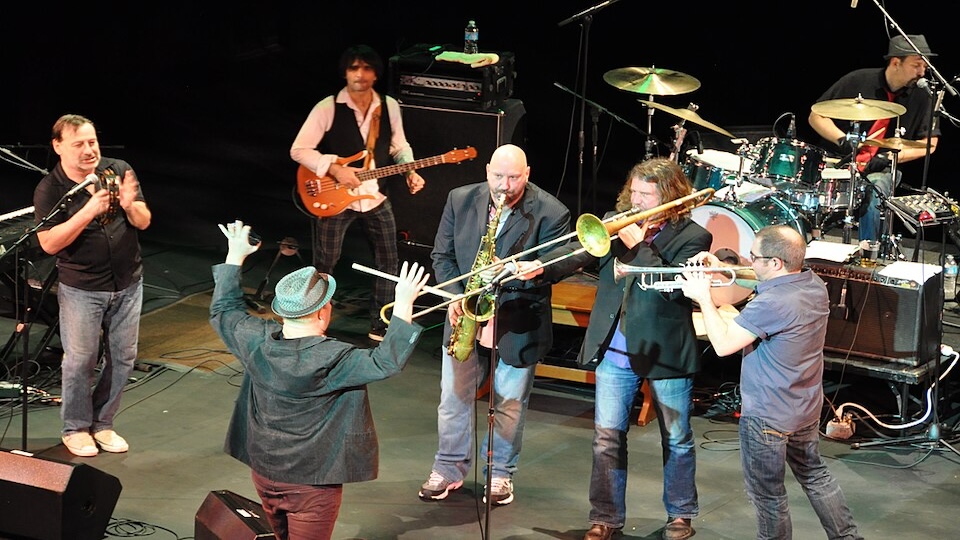
50 years ago this month, the iconic album Born to Run was released by Bruce Springsteen, and the world of rock music was never the same. BTR put Bruce on the international map and secured him the stardom he deserved. Although he graced the cover of two major national weekly magazines and enjoyed near-universal rave reviews and fawning support from his musical peers, the litigation proceedings he faced regarding the ownership of his work caused Bruce Springsteen to be relegated to doing only live appearances for the next 2.5 years.

Between BTR’s birth in August of 1975 through the release of his comeback Darkness on the Edge of Town in the summer of 1978, the world would hear no new material from the Jersey boss; that’s a lifetime for a music artist. This created what I call the “Great Springsteen Vacuum” in the rock music market.
During this period, the absence of Bruce’s groundbreaking sound generated a ghost demand for more Springsteen-like productions. The smarter music executives, record producers, and even some artists, detected a pent-up demand for more hard-nosed, street-wise, sax-driven, growling voices like that of the Jersey troubadour. The rock music universe filled the Springsteen vacuum with a plethora of sound-alike/feel feel-alike/look-alike artists. For some, this was not contrived- but a natural direction to take- while others morphed into it. Some were excellent, while others were less so.
South Side Johnny and the Asbury Jukes – January 1976
There was not a chance in hell that South Side Johnny Lyon and the Jukes would not be signed to a record deal in the wake of Born to Run. They were arguably the best bar band on the East Coast at the time, and they had close ties with the E Street Band, often swapping players in and out of their respective groups. Even though E-Streeter Steve Van Zandt produced and wrote several songs for their first album (Bruce himself contributed two tunes), their first album’s performance proved that the Jukes got there on their own merits.
During the “vacuum” times, the Bruce tie-in was magic for those fans who wished for the real thing. It would be Van Zandt who would leave the Jukes to join Bruce for the BTR tour, but he was sure to subsequently take their demo tape to Steve Popovich of Epic Records. The record executive, smelling the trends, had the Jukes recording their first album, I Don’t Want to Go Home, in less than 4 months after BTR’s release in January of 1976.
Bob Seger – October 1976
Already eight albums into his career, Bob Seger was circling the airport of success, searching for the sound to become an impactful presence in the rock world. Although building his following the authentic way as a concert road warrior who stayed true to his music, Seger had not yet come close to being a household name. His best studio album chart success to date was #131, and his only single to reach the top 100 in the USA was 1974’s “Get Out of Denver” (#80). Taking a cue from the E Street Band’s successful association with Springsteen, Seger established his first credited backing band (Silver Bullet Band) that produced his Night Moves effort in October of 1976. The album proved to be a big international hit, although upon first listen, some thought his single “Mainstreet” was actually Bruce. Rolling Stone magazine was more direct: while their review credited Seger’s album as one of the top deliverables for 1976, they also pointed out that Seger suddenly wrote lyrics “just like Springsteen.” Taking nothing away from his work, he enjoyed a rich and meaningful career in the preceding years outside of “the vacuum” by just being Bob Seger.
Billy Falcon – April 1977
Although he was from Long Island, the cover of Billy Falcon’s 1977 debut album Burning Rose had him barefoot and leaning on the rails of the boardwalk, looking like he was somewhere at the Jersey shore. He had already started to build his rep in the local NY-NJ clubs when label Manhattan Records took a bet that he might be a younger Springsteen. His opening tune of the debut album, “Friday Night,” wasn’t Born to Run, but it was a chip from the block of Bruce’s The Wild and Innocent era. He could make his voice growl, but he seemed to do it a lot (maybe too much). Although he gained a following, Falcon was eventually written off as “Bruce-lite.” But he stayed in the business, achieved a top 40 hit (“Power Windows” in 1991) and eventually had considerable success writing with another Jersey icon, Jon Bon Jovi, for several years.
Billy Joel – September 1977
Billy Joel was already a star by the time the Born to Run vacuum hit the music scene, but by 1977, Joel was morphing from songwriter crooner to hard-hitting rocker. This came to prominence in the fall of that year, when Billy took us on a wonderful ride with The Stranger. Contained in that album was the 7 ½ minute opus “Scenes From an Italian Restaurant,” which was structured very similarly to Born to Run’s “Jungleland.” Like Meatloaf’s “Paradise by the Dashboard Light”, “Scenes” featured a multi-sectional arrangement, with no traditional verse-chorus prominence. Stitching together three different song bits (“The Italian Restaurant Song, “Things Are OK in Oyster Bay,” and “The Ballad of Brenda and Eddie”), the “opera” would be held together by an epic sax solo similar to “Jungleland” (played by Richie Cannata). An instant Billy Joel classic – and he knew a market vacuum when he heard it.

Meatloaf – October 1977
The Bat Out of Hell album was such a sales juggernaut (currently 50 million and counting, the most ever for a debut album) in the autumn of 1977, it cemented the notion that the two-year-old Born to Run tsunami was not yet settled. No one could mistake the album’s similarities with the Springsteen sound (that was undoubtedly a Clarence Clemons-style sax solo opening “All Revved Up and No Place to Go” performed by Edgar Winter), and it didn’t hurt that E-Street drummer Max Weinberg and keyboard wizard Roy Bittan were selected as part of the recording team. Although Springsteen alum, Jimmy Iovine, was an early candidate to produce the album, Todd Rundgren was selected by songwriter Jim Steinman, who requested the same “wall of sound” that Bruce developed with BTR. Steinman would say later that the album’s comparison to Bruce’s music was “puzzling, musically,” but he would concede that “Springsteen was more an inspiration than an influence.” To assure its linkage, Steve Van Zandt appears in this story too, working with Meatloaf’s manager/legal counsel David Sonenberg to once again introduce the project to Steve Popovich of Epic Records.
Bill Chinnock – June 1978
Since the late 60s, Bill Chinnock had been a staple of the music scene in Asbury Park, and at various points, he had future E-Streeters Vini Lopez, Dan Federici, and Gary Tallent come in and out of his musical universe. He was an opening act for Steel Mill (one of Bruce’s early bands) on several occasions. Bill was peddled around for a few years by various talent scouts, one being John Hammond (the “discoverer” of Springsteen for Columbia Records), who recommended Chinnock to Paramount Records. He received little support behind his two Paramount albums (his second was held back from release altogether), but once the BTR vacuum hit the market, Chinnock found himself courted by several major record labels. Eventually signing with Atlantic Records in 1977, he was set to gain traction with an album that he would call Badlands. But the label insisted on remixing the album, adding strings (just like Born to Run) and other new touches, which drew away from Bill’s original musical vision.
The remix delay caused the album to coincide with Bruce’s release of his comeback album Darkness on the Edge of Town in the summer of 1978, which, of course, opened with a song called “Badlands.” That title caused a negative stir, some accusing Chinnock of jumping on the post-Born to Run bandwagon, while his fan base was confused by the softer-sounding remix recording. Although he would release five more albums in his career, Bill Chinnock never gained momentum again.
-Steve Valvano
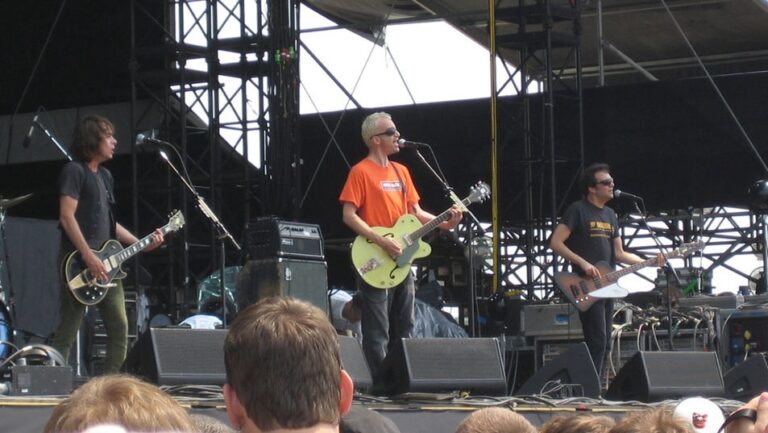
Photo: Southside Johnny. Carl Lender, CC BY 2.0 <https://creativecommons.org/licenses/by/2.0>, via Wikimedia Commons




You forgot Manford Mann cover of Blinded By The Light. Thigh the release might have been earlier than the time frame you are writing about, and some think MM did the song better, there is no doubt their version was helped by the void of new Springsteen releases.
Tim,
Thanks for the comment… I stayed away from those who recorded Bruce Songs in the vacuum era (MM, and a bit later, the Pointer Sisters and Patti Smith), as those would have been recorded anyway, in my estimation. Although they were his songs, none of those singles sounded like Bruce….and for this piece, I was aiming at those artists who attempted (consciously or not) to fill the void.
-SV
Was Southside Johnny’s album Hearts of Stone in the Bruce vacuum too… I forget? I bought that one and saw Johnny and the Jukes on that national tour. I’d missed Springsteen coming thru my town in ’75 because I caught on only a month too late, and was waiting then until Aug ’78 before I got to see him on the Darkness tour.
Badlands was originally planned to be the title of Darkness on the Edge of Town, until word reached Springsteen that Bill Chinnock’s upcoming album was named that. Bruce suspected Chinnock had heard the name from somebody — Gary Tallent was his prime suspect — and poached it. Tallent denied leaking the name, but has said he’s not certain Bruce ever fully believed him.
Al-
Thanks for the extra info…”Hearts of Stone” was released afer a number of months after “Darkness”… therfore Bruce was back and the “vacuum” era had coe to a close.
-SV
Yes, that was quite a lull for the Springsteen fans at that time. I remember listening Seger, Bill Joel and Southside Johnny quite a bit during that time.
I would also include Graham Parker whose rough R&B influenced voice was similar to Springsteen, as was the instrumental make up of his band, The Rumour. Together they released two albums, “Howlin’ Wind” and “Heat Treatment” during the lull between “Born to Run” and “Darkness. . .” Though Parker never had the widespread success Springsteen did, his early work holds up quite well, whether on its own or compared to bard of NJ.
Bob, thanks for your insights… I too am a big GP fan, who started out around the same time Bruce came into the public domain, thus Parker was already established by the time of the “vacuum” years.
I still love the “Stick To Me” album along with his best- “Squeezing Out Sparks.” You may remember, Bruce collaborated with Parker on his 1981 “The Up Escalator” album (song: “Endless Night”). It’s a underappreciated song and album. It would be his last album with the Rumor (until the 2 reunion albums last decade)…. -SV
Nice article. Learned about a couple guys I had never heard of.
Does John Cafferty and the Beaver Brown Band qualify as filling the void during the same time period?
Always heard they patterened Eddie and the Cruisers after Bruce’s search for Roy and Max.
James-
Although they had their roots beginning in the early 70s, John C and the Beavers were (essentially) an early 80′ band…they didn’t record for a label until 1983 when the sound track for “Eddie and the Cruzers” was a bit of a hit. The Bruce vacuum was a distant memory by that point.
Aside: I can attest that John and the band were great guys. My band was their opener at the Stone Pony in the summer of 1984…they were great musicians, generous people and very helpful to other struggling bands (like ours). Thanks for the comment – SV
FU Springsteen. America hating scumbag.
Don’t hold back, how do you realy feel?
Seriously good reply! ????????????
Ramblin Gambling Man #17
I guess they’re probably wouldn’t be a Southside Johnny if there were no Bruce. But if there were no Bruce, I’d hope people would really zero in closer on how great a singer Johnny is and how great the songs were and are – many that were written by Little Steven. To me, Southside should have been an arena act.
Michael, thanks for your comment…
I can see your point about Johnny being worthy of “arena big.” I think his inconsistency on albums was his biggest hurdle. If the output had continuously hit the level of “Hearts of Stone,” I believe it would have happened for him….
But alas….
-SV
How about Johnny Cougar’s (later, of course, John Cougar Mellencamp or just John Mellencamp) ‘Chestnut Street Incident’ from 1976 (a very bad album) and Steve Forbert’s ‘Alive On Arrival’ from 1978 (a very good album)?
Both Billy Falcon and Bill Chinnock are new to me, looking forward to checking them out. Thanks!
“By 1977, Joel was morphing from songwriter crooner to hard-hitting rocker”?
Possibly the most questionable assertion I’ve ever come across in an article on CultureSonar.