Follow us

Bob Dylan: The Song Never Ends
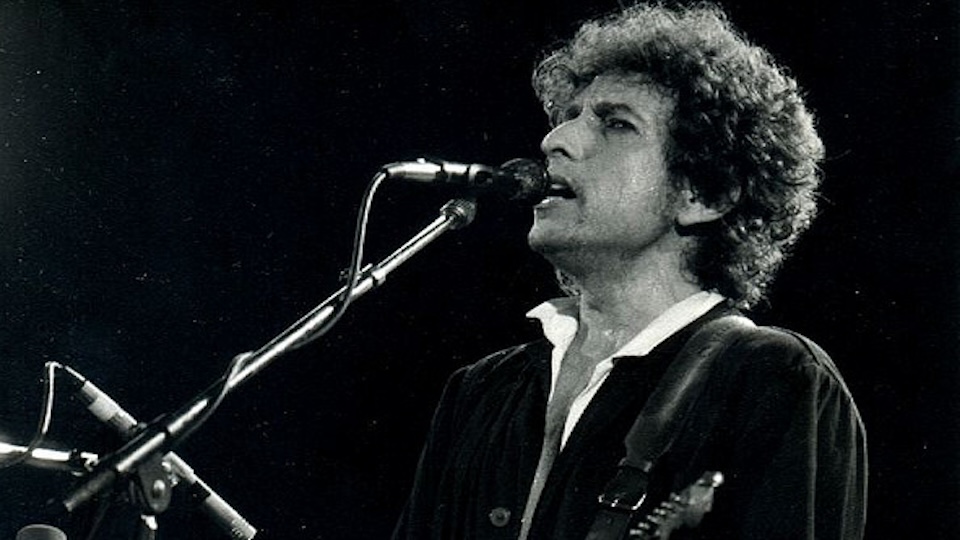
This year, we find Bob Dylan performing on the Outlaw Music Festival 2025, touring with Willie Nelson, Billy Strings, Sheryl Crow, and other performers. On this tour, Dylan, unlike his recent solo tours, where he plays newer songs, his OMF set lists reveal that he has chosen to give the audience songs from throughout his career, and some from a long time back.

Whenever one mentions Bob Dylan, songs are what we think of. Debates can flare up over who writes more heavy or poetic lyrics (Dylan vs. Leonard Cohen), moody or philosophical (D. vs. Joni Mitchell), witty (D. vs. Lennon & McCartney), spiritual (D. vs. Harrison), funny (D. vs. Ray Davies), poignant (D. vs Pete Townshend), and everything in between (D. vs. Paul Simon, Bernie Taupin, Jon Anderson, Janis Ian, Nick Drake, Carole King, Lucinda, Victoria, Hank Williams, and many more.
The long song format, however, is where Dylan cornered the market.
Dylan started using an aeonian or lengthened style early in his career. His second album, The Freewheelin’ Bob Dylan, features “Hard Rain’s a-Gonna Fall,” which clocks in at 6 minutes and 55 seconds. “Hard Rain” is a standout in an album filled with several classics. Allen Ginsberg named it as one of his favorites.
Dylan’s third album has “With God On Our Side,” which goes to 7:08. The folk protest song explores the notion that war can be justified with the excuse that God blesses the winners. Sadly, this sentiment persists. Bob sang a wonderful version of this song with Joan Baez on Bootleg Series Vol. 6. “WGOOS” was inspired by Dominic Behan’s song “The Patriot Game.” The lyrics, melody, and overall “feel” of the song could be heard as a little too familiar to Behan’s. But Dylan’s borrowing from a sundry of sources is a subject for another day, another time.
On Another Side of Bob Dylan, Dylan performs a “Ballad in Plain D” which stretches to 8:16. This “confessional” song is one that Dylan rarely performs. His wistful voice is filled with heartache. He lingers over each word as if struggling to choose one that should either be shared or kept private. Pink Floyd’s David Gilmore lists it as one of the eight songs he would take on a desert island.
Jumping over to Dylan’s sixth album, Highway 61 Revisited, we find “Desolation Row,” which lasts 11:21. Unlike the previous three lengthy numbers, this absurdist song is comical. Harrison Hewitt, in The Dylan Review, gushes over “Desolation Row” and names it his favorite song. It features memorable lines such as “Einstein disguised as Robin Hood with his memories in a trunk, passed this way an hour ago with his friend, a jealous monk.” Hewitt writes, “[The song] takes me up, down; makes me hot, makes me cold; makes me light, makes me heavy. Like Bob Dylan, ‘Desolation Row’ is many things.”
Dylan’s next long one is from Blonde on Blonde. It contains “Sad Eyed Lady of the Lowlands” (11:23), which takes up one whole side of the double album. “SELOTL” is a divisive song. George Harrison found it inspirational; in his autobiography, I Me Mine, he revealed that he was going for that same meditative feel on “Long, Long, Long.”

Michael Gray, author of Song and Dance Man: The Art of Bob Dylan, finds it lacking. He wrote, “It is unsuccessful, and rather grandly so, inasmuch as it is offered on the album as something of extra-special importance and doesn’t live up to its billing.” He continues with faint praise, “It’s long, it’s attractive, it’s puzzling and ambiguous, and Dylan’s voice on it is very beautiful – but it isn’t one of Dylan’s great songs.” Jon Anderson of Yes recorded a sorrowful version on the Steve Howe album Portraits of Bob Dylan.
Throughout the 1970s and 80s, Dylan wrote long songs (such as “Joey” and “Brownville Girl”), but his next great behemoth is 1997’s “Highlands” (16:31). “Highlands” closes the Grammy Award-winning Time Out of Mind. The song is a funny tune filled with odd rhymes and silly details. The protagonist rambles from scene to scene, orders eggs from a waitress, draws a portrait of the waitress, and argues with the waitress. During the quirky story, Dylan rhymes “way wrong” with “Erica Jong.” Dylan tended to shorten this song substantially when performing it live. The Bootleg Series Vol. 17: Fragments features two alternate versions; each is significantly shorter.
Dylan’s latest long studio piece is “Murder Most Foul” (16:56), which was released in 2020 on Rough and Rowdy Ways. It’s a moody piece about the 1963 JFK assassination. Dylan riffs on that tragic day and many musical and pop culture figures. “MMF” flows along slowly with a lilting violin and piano. There are not many artists who could make this work. This haunting song shows Dylan at his boldest. He achieves significant success with the long song format that few would even attempt.
“Talent hits a target no one else can hit; Genius hits a target no one else can see.”- Arthur Schopenhauer.
-Vincent Maganzini
Photo: Xavier Badosa, CC BY-SA 3.0 <https://creativecommons.org/licenses/by-sa/3.0>, via Wikimedia Commons





No mention of Hurricane ??
Hurricane is amazing. I wanted to track some standout tracks. Hurricane, Sara, and every track on Blood On The Tracks are all worth exploring. Thanks for writing!